Skyline University Nigeria

Bangladesh High Commissioner to Nigeria visits Skyline University Nigeria

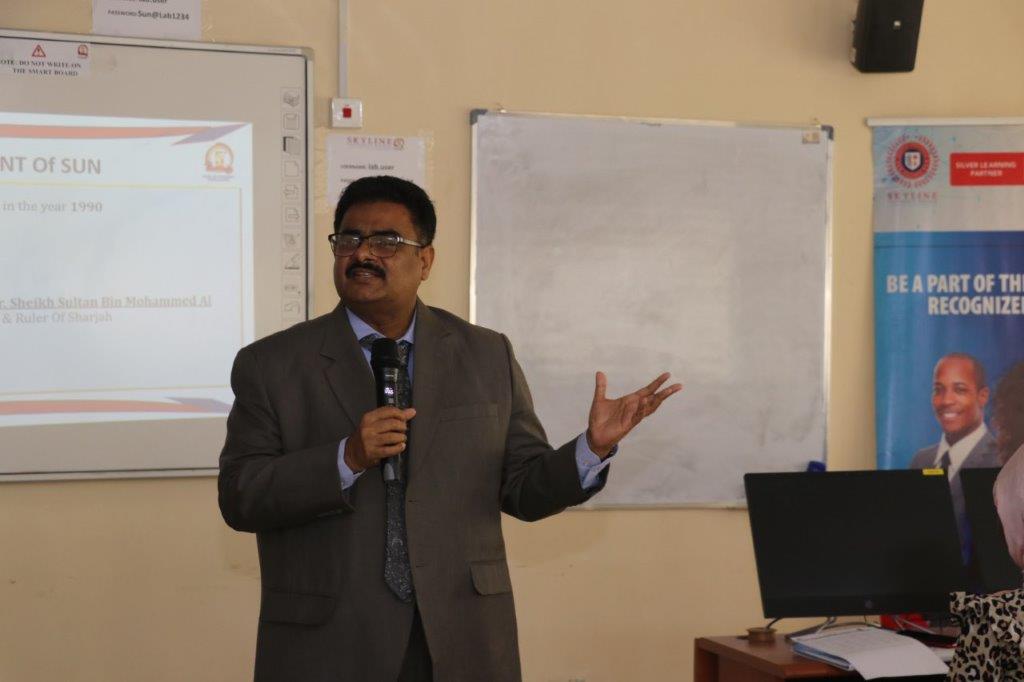
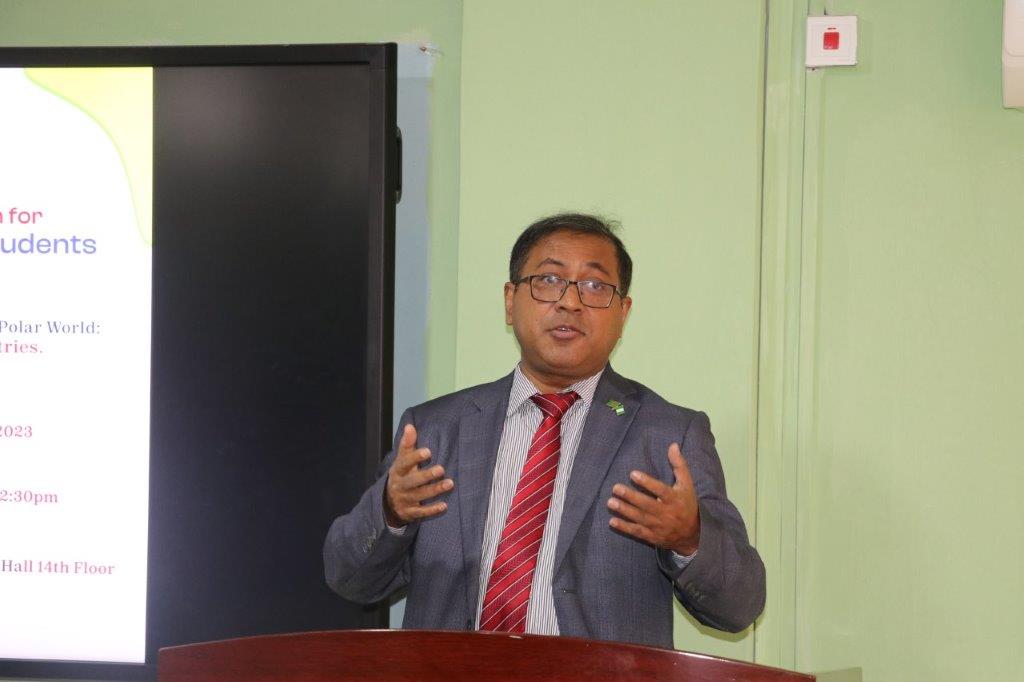
His Excellency, Mr Mas’udur Rahaman, the Bangladesh High Commissioner to Nigeria, visited Skyline University Nigeria campus in Kano to deliver a lecture at a symposium organized by the International Relation of the university today. Delivering the welcome address, the Vice Chancellor of Skyline University Nigeria, Prof. Ajith Kuma, V.V. said the university is honoured to learn from the expertise of a high-level diplomat like Mr Masudur Rahaman. He added that not all the time do students get access to such rare privileges of meeting with influential people within their chosen career paths. On his part, H.E. Masudur stated that he is intensely fascinated by the services provided by the prestigious institution. Having served as a diplomat in Sharjah, UAE, he recounts that SUN has been doing a wonderful job in providing good quality higher education. His lecture titled ‘Challenges and Opportunities in Multi-Polar World: Experiences of Developing Countries’ delved deeply into global geopolitics in today’s rapidly changing technology-driven world. He admitted that technology is opening up more opportunities for developed and developing countries to manipulate technology for their benefit, explaining that technology is no more within the confinement or copyright of the world’s strongest nations like the USA and Canada today. He added that current global trends are multidisciplinary so there is an increasing demand for multifaceted approaches to solving challenges, which indicates a curriculum revamp in the Higher Education sphere. With so much experience from Bahrain, Russia, UAE and China among others, he stated that Nigeria’s diversity is the strength that would support its trajectory to more prosperity.   Mr. Farid Illo the Head of the Department of International Relations at SUN said the symposium was carefully curated to expose the students to recent developments that are necessary for their career development. In the words of Hafsa Dahiru, one of the participants, I learnt alot about global political economy and how Nigeria can adopt ways for development similar to Bangladesh’.  The Vice-chancellor finally expressed his profound gratitude to the embassy of Bangladesh in Nigeria for accepting the invitation to visit Skyline University Nigeria. He thanked the High Commissioner for his availability to share his thoughts with the students of SUN on contemporary global issues.

Bangladesh High Commissioner to Nigeria visits Skyline University Nigeria Read More »

The Advantages of Project-Based Learning

Not all learning processes facilitate the exchange of information between a learner and a tutor. The importance of the interaction between both of them is that it eases every process of imparting knowledge, especially in schools and most importantly in higher education institutions. In adverse cases, the overall essence of knowledge sharing and learning is often defeated when it is devoid of this interchange. This is why projects are highly prioritized in higher education teaching and learning.   Learning is forever an endless circle. New things and ideas continuously emerge as the world progresses by the day. By building on existing knowledge, new ideas create ways by which others can evolve to support the loop. Whether old or new, projects play an important role in scholarship – it unveils the skills of students.   One important thing that project-based learning does is that it allows students to discover new knowledge and alternative ways of solving their academic and future challenges – critical thinking. Without carrying out these projects, students might be unable to explore new ways of carrying out activities or problems associated with their career choices and how they can swiftly navigate them.  Project-based learning provides additional skills for students such as leadership, collaboration and networking. Through group projects, leadership skills can be inculcated whenever students are tasked with the responsibility of coordinating with their peers to produce the best quality resources. This particular task has supported the career of many people in Nigeria and beyond, by excelling in leadership thereby paving the way for development.  When given individual tasks, students take charge of their affairs and are always keen to accomplish their tasks. Again, public speaking skills and deficiencies are usually uncovered when students are given individual tasks, projects or presentations. In contrast, students that are not confident tend to lose focus and are vulnerable to anxiety and its effects. Others who are confident readily grab such opportunities to display their skills and talent and excel with relative ease.  The needed effective participation of students is gotten from a project-based approach to learning. Some students are timid whenever they are engaged in class projects. This set of students is comfortable with average or low performances. So when projects are given to students, they tend to bring this set of laggards on board. It significantly increases student engagement and improves their understanding. Ultimately, it develops the curiosity of students to yearn for more ideas. For higher education lecturers, project-based learning offers an amazing opportunity for feedback. The result of the interaction that happens during and after projects is very helpful for improving teaching and learning methods. This learning process can be efficient in enabling a seamless higher education experience for youths.

The Advantages of Project-Based Learning Read More »

ChatGPT: Understanding the Capabilities and Limitations of OpenAI’s Language Model

Introduction ChatGPT is a large language model developed by OpenAI that has been trained on a massive corpus of text data. This article provides an overview of the capabilities and limitations of ChatGPT and discusses its applications in various fields. The article also examines the ethical and privacy concerns associated with the use of large language models like ChatGPT. ChatGPT is a state-of-the-art language model developed by OpenAI that uses deep learning algorithms to generate human-like text. It has been trained on a massive corpus of text data and is capable of performing a wide range of language tasks, including text completion, conversation, and question-answering. ChatGPT aims to advance the field of artificial intelligence and create models that can understand and generate human language. How ChatGPT is working? ChatGPT is a large language model based on the GPT (Generative Pre-trained Transformer) architecture developed by OpenAI. It is a deep-learning neural network that has been trained on a massive amount of text data to generate human-like responses to a wide range of prompts or questions. The training process involves feeding the model with enormous amounts of text data from various sources such as books, articles, and websites. This process helps the model to learn the patterns and structures of language and develop an understanding of the context in which words are used. Once trained, ChatGPT can generate responses to input text by predicting the next most likely word or sequence of words based on its understanding of the context and the patterns in the text data it has learned during training. In a conversational context, ChatGPT works by taking in a user’s input, processing it, and generating a response based on its understanding of the input and the context of the conversation. The quality of the response depends on the quality of the training data and the complexity of the input text. Overall, ChatGPT is a powerful language model that is capable of generating human-like responses and engaging in a wide range of conversations with users. The dataset used in ChatGPT ChatGPT is trained on a massive amount of text data from various sources, including books, articles, websites, and other publicly available online text. The specific data used to train ChatGPT varies depending on the version and size of the model, but typically it is trained on billions of words or more. The training data is preprocessed to remove noise and irrelevant information, such as HTML tags and markup, and is tokenized into smaller units of meaning such as words or sub-words. The tokens are then used to train the model to predict the probability of the next word or sequence of words in a given context. One of the most significant sources of training data for ChatGPT is the Common Crawl dataset, which is a repository of web pages and other text documents from across the internet. Other sources of data may include Wikipedia, news articles, academic papers, and social media posts. To ensure that ChatGPT is exposed to a wide range of topics and language styles, the training data is carefully selected and diversified to include a mix of different domains, genres, and languages. Overall, the vast amount and diversity of the training data used to train ChatGPT help it to generate more accurate and human-like responses to a wide range of prompts and questions. Capabilities and Limitations of ChatGPT Top of Form ChatGPT is a powerful language model with many capabilities, but it also has some limitations. Here are some of the capabilities and limitations of ChatGPT: Capabilities: Generate human-like responses: ChatGPT can generate responses to a wide range of prompts and questions that sound like they were written by a human. Handle complex and ambiguous input: ChatGPT can handle complex input text that includes multiple meanings or interpretations and can generate responses that take into account the context and the intent of the input text. Engage in a variety of conversations: ChatGPT can engage in a wide range of conversations on different topics and in different styles, from casual small talk to more serious discussions. Understand natural language: ChatGPT has an advanced understanding of natural language and can recognize synonyms, antonyms, and other language constructs to generate coherent responses. Continuously learning: ChatGPT can continue to learn and improve over time as it is exposed to more data and user interactions. Limitations: Lack of common sense knowledge: ChatGPT has limited common sense knowledge, which can lead to errors or misunderstandings when responding to certain types of questions or prompts. Limited ability to reason and think critically: ChatGPT relies on patterns in the training data and cannot reason or think critically, which can result in responses that are illogical or nonsensical in certain situations. Vulnerable to biases in training data: ChatGPT can inherit biases from the training data, such as gender or racial biases, which can lead to inappropriate or offensive responses. Unable to understand the emotional context: ChatGPT has limited ability to understand the emotional context of input text, such as sarcasm or humour, which can lead to misinterpretations or inappropriate responses. Overall, ChatGPT is a powerful tool that can generate human-like responses to a wide range of prompts and questions. However, it is important to be aware of its limitations and use it appropriately in situations where its strengths can be leveraged and its weaknesses mitigated. Reference Brown, T., Mann, B., Ryder, N., Subbiah, M., Kaplan, J., Dhariwal, P., Zaremba, W. (2020). Language Models are Few-Shot Learners. OpenAI. Devlin, J., Chang, M. W., Lee, K., & Toutanova, K. (2018). BERT: Pre-training of Deep Bidirectional Transformers for Language Understanding. arXiv preprint arXiv:1810.04805. Dr. M. Ashok Kumar is a Lecturer I in the Department of Computer Science, Skyline University Nigeria. He has a Ph.D. in Computer Science from Periyar University, India. In addition, he also has MCA from Anna University, India and M.Phil from Thiruvalluvar University, India. You can join the conversation on Facebook @SkylineUniversityNG and on Twitter @SkylineUNigeria

ChatGPT: Understanding the Capabilities and Limitations of OpenAI’s Language Model Read More »

The Importance of Internships for Career Development

Often, acquiring a college degree or any other related certification isn’t just enough to land you your dream job. More recently, it is becoming increasingly difficult for graduates and students to lay their hands on highly competitive opportunities. For youths aspiring to pursue careers, these persistent realities are major setbacks; for creative others, they see limitless opportunities. Internships offer prospects for graduates and students to advance their careers by exploring a variety of technicalities within workspaces. Hence, engaging with professionals effectively supports their career choices and experiences and is necessary for personal and professional growth. It enables them to apply the knowledge gained in classrooms practically. Here, they get to experiment with their strengths, weaknesses and areas they need to improve. There have been massive layoffs by many reputable companies globally as the swift development of Artificial Intelligence (AI) continues to transform public engagements, especially in job delivery. Regrettably, more of these layoffs are on the way. But with internships, students and graduates can explore other viable areas they can harness and develop their skills along those paths. Without gaining this experience, it will be challenging to function effectively in a work environment or get a job.   Worldwide, soft skills such as leadership, organization, time management, teamwork and problem-solving are desperately needed by employers, organizations or companies, to meet current product and service delivery demands. They easily help in securing a job when coupled with classroom knowledge. Acquiring these experiences places you rightly ahead of your colleagues in terms of job seeking and class performance. Internships are very vital in career development because of their countless benefits. There is a wide array of internship opportunities in different disciplines such as Health Sciences, Management, Law, and Communication among others. Interns get to learn basic ethics needed in any workplace that is not just within the bounds of their discipline. Ethics are essential to building trust within your career path and potentially qualify you for more similar and attractive opportunities.  Interns stand to test their knowledge, connect with a network of professionals, get introduced to workspace dynamics, determine areas of interest and ultimately encourage you to carve an appropriate niche. These are just the tip of the iceberg. The intention behind an internship experience is to develop your career as a student so that you would define your suitability and readiness for a similar position after graduation. For graduates, it equips them with the right skills to search for the right job and effortlessly discover it.

The Importance of Internships for Career Development Read More »

Public Speaking Anxiety among University Undergraduates

Several university courses require students to give presentations or speeches as part of the curriculum, making public speaking anxiety a prevalent problem among undergraduates. These projects can be especially difficult for students who battle with public speaking anxiety, which can present as bodily symptoms such as sweating, trembling, and nausea, as well as mental symptoms such as racing thoughts and a sense of panic (Pierini, 2020). University lecturers must realize the potential impact of public speaking anxiety on their students and give support and resources to help students manage their fear and thrive academically. This may involve providing opportunities for practice and feedback, offering workshops or courses on public speaking, and being empathetic and accommodating to students who struggle with public speaking fear (Greeve, et al., 2021). Undergraduate students in higher education may face anxiety when it comes to public speaking for a variety of reasons. A lack of experience or self-assurance in public speaking may be the cause for some people. Others can be concerned about being evaluated or judged by their classmates or teachers. In addition, the worry that one will humiliate themselves, forget their content, or make a mistake while speaking in public can also be a contributor to the condition known as public speaking anxiety (Venkatesh, 2020). Undergraduate students in universities today are fortunate to have access to a variety of services that might assist them in overcoming their fear of public speaking. Students can gain the knowledge, experience, and self-assurance they need to excel in public speaking by taking part in one of the many colleges that provide workshops or classes on the subject of public speaking. In addition, higher education institutions have student support services, such as counselling or peer mentorship Programmes, which can assist students in learning how to manage their anxiety and create measures for coping with it. The practice of relaxation techniques, such as deep breathing, visualization, and progressive muscle relaxation, can also be beneficial to individuals who feel anxiety related to public speaking. Also, preparing and practising presentations or speeches ahead of time can assist in increasing confidence and minimizing anxiety. This can benefit both the presenter and the audience. It is crucial to keep in mind that worry about public speaking is a typical sensation, and that many outstanding public speakers had to work hard to overcome their nervousness before they could achieve success. Undergraduate students in higher education can learn to control their nervousness, become excellent public presenters, and grow more confident in their abilities with time, consistent practice, and assistance. References Grieve, R., Woodley, J., Hunt, S. E., & McKay, A. (2021). Student fears of oral presentations and public speaking in higher education: a qualitative survey. Journal of Further and Higher Education, 45(9), 1281-1293. Pierini, F. (2020). Public Speaking in EFL Postgraduate Courses in Italy: A Case Study with Students of Political Science, University of Genoa. English Language Teaching, 13(8), 127-134. Venkatesh, A. (2020). Public Speaking Anxiety in College Students: Developing A Treatment Protocol Through Correlation Of Socio-Environmental Causes To Non-Traditional Treatment Methods. Mr. Adelokun Adetunji Oluwapelumi is a Lecturer II at the School of Art, Management and Social Science, Skyline University Nigeria. He has a Master of Arts Degree in English Literature from the University of Ibadan and a graduate degree in English from Ajayi Crowther University, Oyo Nigeria. You can join the conversation on facebook @SkylineUniversityNG and on twitter @SkylineUNigeria

Public Speaking Anxiety among University Undergraduates Read More »

Skyline University Nigeria students bag 1st and 2nd Runner-up positions at TiE University MENA Regional Pitch Competition 2023

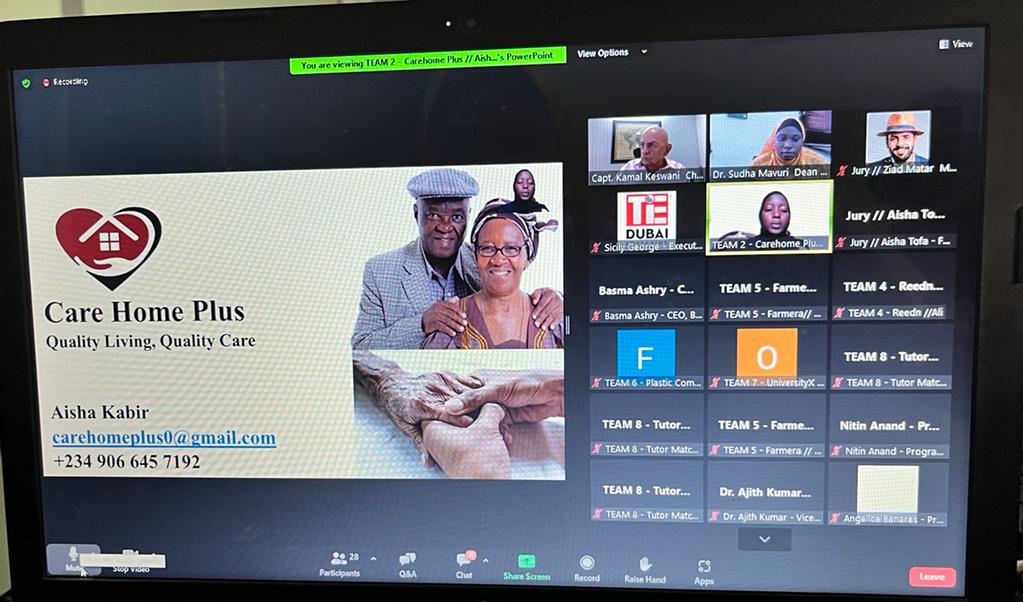
Students of Skyline University Nigeria (SUN) have participated and won 1st and 2nd Runner-Up positions in the pitching competition organized by TiE University MENA Regional Pitch Competition 2023 running in its fifth year in the Middle East. All the regional finalists of the competition made their way through over 150 applications and over 30 jury members for the regional face-off. The competition was open to both graduate and undergraduate university students of the respective regions. Representing 16 different universities, 26 teams have ideas spread across 13 industries and competed in three different categories to have three regional winners -Emirati, MEA and GCC/UAE. After a rigorous selection of the best ideas from over 150 applications from across the regions, 8 teams made it to the shortlist categories for the regional-level competition final round. Out of the 8 shortlisted teams, 4 teams were from Skyline University Nigeria, 2 from Lagos State University, 1 from the University of Ibadan and 1from the Federal University of Technology. The pitch – UniversityX from Lagos State University emerged victorious and won first prize and is eligible to participate in the TiE Global finals. The Plastic Company – Recymade team emerged as the first runner-up while Care-Home Plus emerged as the second runner-up, both teams are from Skyline University Nigeria. All three finalists will fly to pitch for the global finals in May 2023 at Silicon Valley, in the USA. This year’s Programme for the first time ran an emerging entrepreneur category with a regional championship for the region of Middle East and African student entrepreneurs. Thus, SUN students were opportune to participate. The Tie Programme offers rare opportunities for future-generation entrepreneurs as students to bring forth their entrepreneurship ideas to global discourse. It is an exciting platform that allows students to present feasible ideas for business ventures. It actively supports youth development and innovation through this initiative. The President Emeritus of TiE Dubai Mr P K Gulati and Pro-Chancellor of Skyline University Nigeria, Mr Nitin Anand said the idea of including universities in other countries apart from UAE to participate in the competition was a huge success. They are thrilled about the engagement of teams from Nigeria, Kenya and a few other African countries. The winner and all other participants were encouraged to continue exuding the courage and confidence they showed throughout the Programme for their future endeavours.  

Skyline University Nigeria students bag 1st and 2nd Runner-up positions at TiE University MENA Regional Pitch Competition 2023 Read More »

Skyline University Nigeria organizes a Workshop for its Academic Staff on Journal Publication

To acquaint academic staff with information on how to easily publish their research and papers in globally acknowledged journals around the world, Skyline University Nigeria organized a one-day workshop titled “Getting Published; From Start to Finish”. The session was facilitated by Dr Surajo Kamilu Sulaiman, a senior lecturer from the Department of Physiotherapy, Bayero University Kano. In his opening remark, Dr Isa Usman Lawal the Dean of the School of Basic Medical Science (SBMS) and an Associate Professor in the Department of Physiotherapy at Skyline University Nigeria said, he was pleased that the resource person was able to accept the invitation to facilitate the workshop within the short period of notice. He also noted that the session is quite imperative for staff to excel in their respective careers and contribute effectively to global discussions. In his words, Dr Surajo thanked the management of Skyline University Nigeria for providing him with the opportunity to deliver a lecture in the prestigious institution. He reiterated the importance of publications in today’s rapidly changing world and how academics have a big role to play in global development. Dr Surajo highlighted that Africa as a whole contributes less than 1% to global publications with Sub-Saharan Africa being the lowest. Although Nigeria is among the countries that contribute the most from West Africa, the level of publication from the continent is relatively low, especially because of the immense growth rates that have been recorded by active journals and newly created journals in the world. The session took the participants through the rigorous nine processes of getting an article published especially for global visibility and impact. The facilitator also enumerated the cycle of publication which is significant in supporting innovations and ideas to be continuously disseminated. Finally, Dr A. Senthil Kumar, the Dean of the School of Science and Information Technology (SSIT) presented the facilitator with a certificate and award of recognition on behalf of the management of SUN, for ably facilitating the workshop that would be beneficial for the institution and Nigeria as a whole. In attendance, were Deans, HODs and academic staff from different departments of SUN.

Skyline University Nigeria organizes a Workshop for its Academic Staff on Journal Publication Read More »

Overview of the Occurrence of Nickel in Nigeria

Introduction Nickel is a shiny, silvery metal that can take a high polish and is malleable, hard and ductile. It is magnetically magnetic and has a low thermal and electrical conductivities. Its important characteristics for industrial use include; resistance to oxidation and alkali corrosion, strength at high temperatures, and the capacity to alloy with many other metals. Nickel has an average abundance of 80 parts per million (ppm) in the earth’s crust, however, it is highly concentrated in the core. The transition group metal nickel, which has 14 known isotopes, including five stable ones, is the fifth most prevalent element on earth. It can replace iron in many minerals because it has the same oxidation state (+2) and comparable ionic size to iron and other similar transition group metals. Nickel-bearing minerals can be found in laterites and as sulphides in significant proportions. Garnierite and nickeliferous limonite are the two principal nickel-bearing minerals found in laterites.The most significant nickel sulphide mineral is pentlandite, which is found in mafic and ultramafic igneous rocks along with pyrrhotite, chalcopyrite, and pyrite in economic deposits. Occurrence of Nickel in Nigeria Nickel, an important industrial metal used in several applications including the fabrication of stainless steel, batteries, and electronics, is reportedly present in substantial amounts in Nigeria. The northern states of Kaduna, Kebbi, Nasarawa, and Taraba, according to the Nigerian Geological Survey Agency (NGSA), are where the majority of Nigeria’s nickel reserves may be located. (Obaje 2009). About 5 million metric tonnes of nickel deposits, with an average nickel concentration of 1-3%, have been identified in Nigeria (Obaje 2009). According to these projections, Nigeria has a lot of potential for creating a nickel industry that can supply both domestic and international markets. Due to a lack of infrastructure and investment in the sector, Nigeria still imports nickel for use in industry. The Nigerian government and private companies have made several attempts to grow the nickel sector. To add value to the raw nickel ore, the Nigerian government announced plans to build a $5 billion nickel processing factory in Kaduna State (Reuters, 2016). The proposed factory would be capable of producing 600,000 tonnes of pure nickel annually, and it is anticipated to increase employment and regional economic growth. Additionally, there are proposals to build smaller nickel processing facilities in other regions of Nigeria to boost domestic output and lessen reliance on nickel imports. The Nigerian government is attempting to diversify the economy and lessen its reliance on oil exports through these Programmemes. To sum up, Nigeria has large nickel reserves that could spur the country’s economic expansion and development. To utilise the potential of the nickel deposits, greater investment and infrastructure development are required in the nation’s nickel industry, which is still relatively underdeveloped. References Obaje N. (2009). Geology and mineral resources of Nigeria. Springer. Reuters. (2016). Nigeria to tap mineral wealth for economic development. Mr. Aliyu Mohammed Lawan holds a Master’s degree in Applied Geophysics from Ahmadu Bello University Zaria and a Bachelor’s degree in Geology from the University of Maiduguri. He has also obtained a National Certificate of Education from FCE (T) Potiskum. You can join the conversation on Facebook @SkylineUniversityNG and on Twitter @SkylineUNigeria
Overview of the Occurrence of Nickel in Nigeria Read More »

Practice Productive Reading

Starting university or resuming school after a holiday is always tricky. Both statuses require calculated efforts to adapt to the higher education learning environment. For new students, the new concepts and ideas that the university teaches need a lot of time to understand and a lot of preparation while for returning students, going back to school requires a lot of psychological revamping. Anxiety, stress and fear overwhelm new students such that they simply resort to reading when necessary -for informed tests and general examinations. This usually takes a toll on them as they tend to face low grades in their first academic year. It equally affects their overall grades that’ll as they dictate the outcome.  These experiences faced by newbies are slightly different from that of returning students except for exceptional cases where students are battling with low grades. But, these sets are also confronted with problems of trying to remember most of the things they were previously taught. This is a relearning process.  Because of the demands of the higher education system to foster knowledge production, reading has to be done not exclusively for passing tests and examinations but to inculcate and nurture productivity in the creation of new ideas. Hence, this is why students are always encouraged to read and understand the basics of their discipline or career path. Essentially, practicing productive reading requires engaging yourself in the world of information about your subject area. As a student, you’d find it very interesting to have a deeper understanding of the ideas communicated such that the qualification you receive at the end of your stay, is earned and worth your effort. For students and all reading enthusiasts, wander in the world of writers and researchers. Reading is beyond a short-term goal, it’s a lifetime investment. It aids your creativity and unlocks the doors of limitless opportunities – getting a dream job or a life-changing opportunity. 

Practice Productive Reading Read More »

SUN conducts Orientation for New Students (Spring 2022-2023AY)

The management of Skyline University Nigeria organized a one-day orientation exercise for new students that have been admitted during the spring intake, 2022-2023AY. The process is to acquaint students with the necessary guidelines and policies that would support their fruitful stay at the university. Welcoming the students, the Vice-Chancellor of Skyline University Nigeria alongside the Registrar, Deans of Departments, HODs and other heads of Student Support Services charged the new students on how they can harness the richly endowed institution to become successful. In his remarks, Prof. Ajith Kumar V.V. explained the orientation exercise as an important tool to guide the students as they step into another phase of learning in their lives. His presentation navigated around the history of Skyline University Sharjah which led to the birth of Skyline University Nigeria. He congratulated the students for choosing Skyline University Nigeria to study their respective career choices. In his kind words to the students, “Your parents have invested so much in you. Make it worthy”. He then encouraged the new students to maximize the enormous opportunities made available by the university so that they can able to give back to their communities after gaining knowledge and developing their characters. Prof. Ajith also indulged students in time management as it is essentially significant for their careers and beyond. He said, “College life is the best life you can have with thousands of opportunities to network, participate in competitions and cull leadership skills needed in this century”. Speaking during the exercise, the Registrar of SUN Mr Haruna Aliyu presented the several academic and administrative services available in the university. He encouraged students to attend lectures to ensure their eligibility for exams as only 75% of attendance qualifies students and the importance of the institution’s Learning Management System |(LMS). Mr Aliyu charged students to abide by the school policies on acts such as drug abuse and the use of mobile phones during lectures. In their various remarks, the Deans and HODs encouraged students to make themselves a part of the institution’s process. Skills, values and knowledge are the core principles that dominated their presentations. They advised students to be good ambassadors of SUN and be part of extra-curricular learning processes. As part of the orientation process, representatives of the management of Information and Communication Technology (ICT), the Library, the School of Continuing Learning (CCL), and Corporate Affairs, the Chief Security Officers (CSO) made engaging conversations on policies that can guide can students’ stay on SUN campus. The students were captivated by the experiences shared by the current Student’s Representative Council’s president, Haruna Baffa. Then, they proceeded to collect books and campus tour around the vibrant environment of SUN campus.

SUN conducts Orientation for New Students (Spring 2022-2023AY) Read More »