Skyline University Nigeria

NTIC Girls win Skyline University Nigeria’s Game of Brains Competition

Students from Nigerian Tulip International Colleges (NTIC) girls section have emerged victorious in the Game of Brains quiz organized by Skyline University Nigeria (SUN). The quiz was a part of commemorating World Innovation and Environment Days 2023, by the Centre for Excellence at the University. The 2nd and 3rd positions were claimed by students from Prime College and Crescent International School respectively. All of the positions were determined after an intense three rounds of elimination processes. The quiz was battled by 11 schools in Kano State which were invited by SUN. The quiz competition was organized to showcase the talents of students in business pitching ideas. This was done in order to inculcate the entrepreneurship mindset in them as they are at the stage of goal and career development. In her speech, the Director of Academic Support Service (DASS), Ms. Sarada Maganti said the quiz was organized to motivate students to pursue careers in entrepreneurship with vast innovative ideas to support sustainable development around the world. Mr. Anas Aminu Kamfa, the quiz master while congratulating the participants said, that they are all winners despite the fact that only a few were victorious. He appreciated the management of SUN for organizing such an impeccable competition and noted that the university is doing really well in Kano State. One of the participants of the quiz from Government Technical College Kano (GTC), Mahfuz Ibrahim said the competition was quite eventful. He congratulated the participants and encouraged them to learn from the words of Nelson Mandela, who says “I never lose. I either learn or win”. Earlier, SUN organized a Greenathon to unveil sustainable business ideas by Senior Secondary School students as the world continues to fight environmental challenges and climate change’s adverse effects. Finally, trophies and consolation prizes were distributed to the winners and the runners-up of the competition. Also, certificates of participation were given to the students who took part in the quiz. You can join the conversation on Facebook @SkylineUniversityNG and on Twitter @SkylineUNigeria 

NTIC Girls win Skyline University Nigeria’s Game of Brains Competition Read More »

Greenathon; Skyline University Nigeria commemorates World Innovation and Environment Days 2023

Skyline University Nigeria has recently organized a greenathon to celebrate two global notable days – World Innovation Day and World Environment Day 2023. The event was organized to unveil sustainable business ideas from Senior Secondary School students as the world continues to fight environmental challenges and climate change’s adverse effects. Dr. S Senthil Kumar, the Head of Management Department said, “The greenathon was a way to create new ideas and prove talents which is what Skyline University Nigeria does. We have a Centre of Excellence where we can show more eco-friendly projects, waste management and recycling products. It is a way to expand your careers”. The SUN Centre of Excellence organized the event as its maiden edition themed ‘climate change, waste management and renewable resources’. The Greenathon – Green Business Ideas Contest will be an annual event that would be inviting Senior Secondary School students in Kano to design exceptional Business Model Canvas for green business ideas. The models would be to develop sustainability related to green and clean environmental problems. SUN decided to celebrate World Innovation Day slated on April 21st and World Innovation Day on 5th June together, to encourage innovation alongside global demands to address challenges such as energy crises, fossil fuels depletion, waste management, climate change, global warming, environmental pollution and other related issues. The session invited about 15 secondary schools in Kano to participate. After the presentation of business ideas and critical assessment of the pitches, the winners were selected. Aysha Tofa and Khaulat Bebeji, the judges invited, selected the best 3 business ideas based on their wealth of experiences over the years. Ayah Khalil Mosleh, emerged victorious clutching the first prize from Crescent International School. The second position was awarded to Ameena Umar Khalil and Amina Aminu Sani from Prime College. For the third position, Maryam Abubakar from Khadija Memorial College was selected. The judges also appreciated Mahfuz Ibrahim and Usman Nura Abdulkadir from Government Technical College Kano, for their notable presentation during the competition. Aysha and Khaulat were also awarded by the management of SUN for their outstanding achievements in their distinctive fields of endeavour.  

Greenathon; Skyline University Nigeria commemorates World Innovation and Environment Days 2023 Read More »

Infectious Diseases and Cancer: what we need to Know

Cancer is defined by the uncontrollable growth of abnormal cells in the body, making them exceed their usual boundaries thereby invading the other body organs. Cancer is ranked second after cardiovascular disease, as the leading cause of death worldwide, with approximately one in six deaths. Infections occur following exposure to certain infectious agents (pathogens) be it bacteria or viruses. As this infection progresses, it may lead to a specific type of cancer. Cancer is characterized by a continual and uncontrolled growth of cells forming a mass of tissue that may spread to other body parts. The progression of certain infections to cancer is mediated through several different mechanisms which include but are not limited to alteration in the normal function of the immune system, inflammation and alteration in the normal function of a gene. Carcinogenic infections mainly caused by viruses and bacteria are known to significantly contribute to the global cancer burden. This is observed predominantly in Africa and other underdeveloped, and developing countries. These infections are regarded as an important cause of cancer and are known to account for 16.1% of all cancer cases globally in the year 2018. According to the International Agency for Research on Cancer (IARC), there are 11 infectious agents, otherwise referred to as group 1, which have been implicated as the major causes of infectious cancers. These are viruses; (hepatitis B and C (HBV and HCV) causing liver cancer, human T-cell leukaemia virus type 1 (HTLV-1) causing Adult T-cell leukaemia/lymphoma (ATL), high-risk human papillomavirus (HPV), and their 12 different subtypes (type16, 18, 31, 33, 35, 39, 45, 51, 52, 56, 58, and 59) causing cervical cancer, human herpesvirus type 8 (HHV-8) causing Kaposi sarcoma “rare cancer of the immune cell, with lesions growing in the mouth, throat, skin, and tissues”, Epstein-Barr virus (EBV) “linked with nasopharyngeal cancers, Burkitt and non-Hodgkin lymphoma” and bacteria (Helicobacter pylori causing gastric cancer)  and parasites (Schistosoma haematobium causing bladder squamous cell carcinoma, Clonorchis sinensis causing cancers of biliary duct system “bile ducts and gall bladder”, and Opisthorchis viverrini causing stomach cancer). Cancer accounts for 18.1 million cases annually. In 2018, it is estimated that 9.6 million people died of cancer worldwide. The cases of cancer in Nigeria, sub-Saharan Africa, and other developing countries are worrisome going by the projections that by the year 2030, the developing countries with Nigeria inclusive will account for approximately 70% of all new cancer cases, with approximately 13.1 million mortalities. This is mainly attributed to an increase in life expectancy and population growth, increased prevalence of obesity, physical inactivity, and smoking. In Nigeria, along with other underdeveloped, and developing countries, once a patient is diagnosed with cancer, the high level of fear with which the patient’s family developed, made the populace including the elite class consider it a direct death sentence. This may be attributed to the fact that cancer is deadly, and the burden of the disease is expanding. In Nigeria and other African countries, high cases of mortality due to cancer are contributed to the unprepared nature of most health systems, the high cost of treatment, the absence of healthcare providers in remote villages and towns, and the lack of access to timely and high-quality diagnosis and treatment. Nigeria’s cancer cases are characterized by a high case-fatality ratio. The annual cases of cancer in Nigeria are increasing. According to a study conducted in 2012, Nigeria records approximately 100 000 new cases of cancer per year, with 15% of the total (681,000) cases in Africa. According to new studies conducted in the year 2020, Nigeria records 102,000 new cases annually with approximately 72,000 deaths. Comparing the two estimates, a decreasing trend in overall cancer deaths is observed, and this might not be in connection with the increased level of government intervention, awareness, and the location in which the studies were conducted. Despite the reduction in the death rate, the level remains alarmingly high. Cancer Prevention and Control Strategies By the modification or avoidance of key risk factors, high cancer mortality (30 -50%) can be preventable. More so, the implementation of evidence-based prevention strategies has been found to drastically reduce the burden of most cancers. These include early hospital visits for diagnosis, early detection, and management. Part of the keyway to the prevention of cancers include; regular exercise, safe sex, taking healthy diet, avoiding contact with indoor and urban polluted air, regular, timely, and qualitative health care, treatment of chronic infections, reduced exposure to ultraviolet radiation, effective vaccination against HPV, HBV, and HCV, abstinence or regulated alcohol and tobacco use, and above all living a healthy lifestyle. Reference A. S, E. HS, O. E and L. I., (2017). “Breast cancer mortality in a resource-poor country: A 10-year experience in a tertiary institution,” Sahel Medical Journal, vol. 20, no. 3, p. 93, 2017. C. d. M. Martyn Plummer, J. Vignat, J. Ferlay, F. Bray and S. Franceschi. (2016). “Global burden of cancers attributable to infections in 2012: a synthetic analysis,” Lancet Glob Health, vol. 4, 2016. E. Jedy-Agbaa, M. P. Curado, O. Ogunbiyi, E. Oga, T. Fabowale, F. Igbinoba, G. Osubor, T. Out, H. Kumai, A. Koechlin, P. D. Patience Osinubi, W. Blattner and a. C. A. Adebamowo, (2012). “Cancer Incidence in Nigeria: A Report from Population-based Cancer Registries,” Cancer Epidemiol., vol. 36, no. 5 (e271–e278). Ismail Rabiu is an Assistant Lecturer in the Department of Microbiology, Skyline University Nigeria (SUN). He holds an M.Sc in Medical Microbiology with a specialization in Pharmaceutical Microbiology and Infectious diseases and is a first-class graduate of Microbiology in Bayero University Kano.  You can join the conversation on Facebook @SkylineUniversityNG and on Twitter @SkylineUNigeria 

Infectious Diseases and Cancer: what we need to Know Read More »

Self-Cultivation Skills for Ethical and Emotional Wellbeing – Musings

How can one cope with emotional well-being challenges in a world of animosity, cutthroat competition, and being surrounded by people with self-centric attitudes? With the experience of attending training and practice, the author attempted to share her musings in this article. Practicing core life values and skills such as empathy, mindfulness, and compassion equip people to cope with their challenges with emotional well-being. It also provides them with skills that will help and contribute to developing peaceful minds and sustainable societies. It will start with our introspection on our (humans) core values and how they form. Questions like this help build healthy relationships with self and others and help to perform better in workplaces more compassionately by reducing animosity and toxic relationships in personal and professional spaces. These skills also helped many leaders in the corporate world in their professional arenas to deliver effective leadership. Compassionate integrity refers to the ability to live one’s life in collaboration with one’s values with a recognition of common humanity and a basic orientation to kindness and reciprocity. One can thrive as an individual and in society by cultivating human values as skills. The first step toward improving relationships with others and positively impacting communities is developing increased personal well-being. This approach has been referring as the process of self-consciously working to increase these types of personal skills and well-being, i.e., “Self-Cultivation.” Skills required under this process are Calming Body and Mind, Ethical Mindfulness, Emotional Awareness, and Self-Compassion. Calming Body and Mind by doing activities such as breathing exercises, listening to music, taking a walk barefoot in the beach sand, yoga, and meditation helps to understand how our body and mind respond to various situations inside and outside one’s control and guides people to choose righteous responses sensibly during stressful situations. This practice helps people to return to their resilient zone when they go out of it due to internal or external disturbances and puts them into the high or low autonomic nervous system (CIT Many leaders confirmed in various sources that the training and deployment of this skill involve paying attention, on purpose, in the present moment, non-judgmentally. As said by Karen May, vice president at Google, she has developed the ability to mentally recharge by taking one “mindful breath” before walking into every meeting. It takes her roughly six seconds, and in that time, she brings her full attention to one breath, resetting her body and mind. Tennis superstar Novak Djokovic opined that the mental technique has game-changing consequences and helped him to sustain high performance for extended periods. (Chade-Meng Tan, 2015). Another skill that helps people is Emotional Awareness. What is emotional awareness? It is an awareness of one’s emotional state. Working on this skill will help people how one can be less reactive and respond to triggers (trauma, sadness, fear, stress, unhappy news, crying spells, anger, etc.) consciously with greater wisdom. As per some institutions such as CIT-Life University, USA, and UNMGEIP training workshops (the author attended), this skill can be learned through emotional intelligence techniques. Goleman (1995) recognized five distinct categories of skills that form the key characteristics of EI: self-awareness, self-regulation, self-motivation and motivating others, empathy, and social skills (Landry, 2015). Emotional intelligence includes self-awareness, impulse control, persistence, zeal and self-motivation, empathy, and social deftness. A lack of emotional intelligence can destroy the intellect and ruin careers. Perhaps the highest impact is on children and youth, for whom risks include depression, eating disorders, unwanted pregnancy, aggressiveness, and violent crime. Ethical mindfulness builds awareness about thoughts and how they affect actions, develop attentiveness and clarity in thinking, and purposefully pay attention to the present moment with an attitude of interest or curiosity rather than judgment. It is a state of being that acknowledges every day ethics and ethically important moments as significant in clinical care to enable ethical clinical practice. (Guillemin, & Gillam 2015). Some trainers assume that training the mind is like training a puppy. As per some of the trainers of this skill, three techniques will help people to learn this skill are heedfulness (being vigilant to protect self and others from harm through words and actions), mindfulness (being aware of and remembering core values), and awareness (present moment consciousness of speech and actions). Self-compassion is learning to set realistic expectations and aspire to excel on personal or professional fronts without getting demotivated. Self-compassion involves being kind and understanding toward own self, even during moments of suffering or failure. Practicing this skill will help people explore the underlying motivation behind our thoughts and actions and how suffering and happiness do not depend solely on external situations. This will help to learn how expecting happiness from external sources, rather than internal ones, often fails to bring lasting satisfaction and finally helps to explore how unrealistic expectations can lead to suffering and excessive self-criticism.  Engaging in skill training in compassion is not enough for ethical and effective decision-making; it must combine with critical thinking and an understanding of reality. Practicing critical thinking guided by our values’ context will help us achieve a happy life for others and ourselves. References Freeman L (2009). Relaxation therapy. In Mosby’s Complementary and Alternative Medicine: A Research-Based Approach, 3rd ed., pp. 129–157. St. Louis: Mosby Elsevier Goleman, D. (1995). Emotional intelligence. Bantam Books, Inc. Guillemin, M., & Gillam, L. (2015). Emotions, narratives, and ethical mindfulness. Academic medicine: journal of the Association of American Medical Colleges, 90(6), 726–731. Dr. Sudha Mavuri is an Associate Professor in the Department of Economics, and the current Dean of Arts, Management and Social Science, Skyline University, Nigeria. She has a Ph.D in Economics, M.A in Economics and BA in History, Economics and Political Science with Economics Major from Osmania University, Hyderabad, India.  You can join the conversation on Facebook @SkylineUniversityNG and on Twitter @SkylineUNigeria

Self-Cultivation Skills for Ethical and Emotional Wellbeing – Musings Read More »

Personal Values and Beliefs are what define you – Ashish Punjabi

Mr. Ashish Punjabi, The Chief Operating Officer (CEO) of Jacky`s Group of Companies, has described personal values and beliefs as strategic elements that are pivotal to the success of a person or business. He said mission and vision if identified correctly, are powerful for the realization of personal or business goals. To become successful, Mr. Punjabi admitted that failure is bound to surface. And it is only through failure that the foundation of success is laid. The personal satisfaction that comes with success is fueled by learning. He states that “I prioritize learning so much that I engage in mentorship activities. That is the only way I learn”. In his welcome address, the Vice-Chancellor of Skyline University (SUN), Prof. Ajith Kumar V.V., said the university is honoured to have Mr. Punjabi in the Guest Lecture Series, a renowned business expert and possesses the right experience to share with the students of SUN. He highlighted that the wealth of experience would support students as they creatively craft their future. Due to his over 30 years of business experience, Mr. Punjabi explained he had to work with various people to identify his values and how he needed to be supported towards achieving his goals. If people close to you are unaware of your ambition, they wouldn’t know how to support you, he said. While he applauded SUN for organizing such lectures for students, he emphasized the need for students to seek information from experienced personalities. In his words, “It is very easy to give a piece of advice and everyone can do that. But experience comes in when people want to know how to escape terrible situations seamlessly or how you learnt from your mistakes”. Delivering the closing remarks, Mr. Trimisiyu Lawal said it was indeed a great opportunity for students to be exposed to realities from an experienced person like Mr. Ashish. He said the students have seen worthiness in self-development and its enormous benefits. In his words, the President of the Students Representative Council (SRC), Haruna Baffa, said “it was indeed a priceless opportunity for them as students to hear words of wisdom from Mr. Ashish”. He hopes to apply the knowledge he gained as he prepares for future challenges.

Personal Values and Beliefs are what define you – Ashish Punjabi Read More »

Infectious Diseases and Cancer: What we Need to Know

Cancer is defined by the uncontrollable growth of abnormal cells in the body, making them exceed their usual boundaries thereby invading the other body organs. Cancer is ranked second after cardiovascular disease, as the leading cause of death worldwide, with approximately one in six deaths. Infections occur following exposure to certain infectious agents (pathogens) be it bacteria or viruses. As this infection progresses, it may lead to a specific type of cancer. Cancer is characterized by a continual and uncontrolled growth of cells forming a mass of tissue that may spread to other body parts. The progression of certain infections to cancer is mediated through several different mechanisms which include but are not limited to alteration in the normal function of the immune system, inflammation and alteration in the normal function of a gene. Carcinogenic infections mainly caused by viruses and bacteria are known to significantly contribute to the global cancer burden. This is observed predominantly in Africa and other underdeveloped, and developing countries. These infections are regarded as an important cause of cancer and are known to account for 16.1% of all cancer cases globally in the year 2018. According to the International Agency for Research on Cancer (IARC), there are 11 infectious agents, otherwise referred to as group 1, which have been implicated as the major causes of infectious cancers. These are viruses; (hepatitis B and C (HBV and HCV) causing liver cancer, human T-cell leukaemia virus type 1 (HTLV-1) causing Adult T-cell leukaemia/lymphoma (ATL), high-risk human papillomavirus (HPV), and their 12 different subtypes (type16, 18, 31, 33, 35, 39, 45, 51, 52, 56, 58, and 59) causing cervical cancer, human herpesvirus type 8 (HHV-8) causing Kaposi sarcoma “rare cancer of the immune cell, with lesions growing in the mouth, throat, skin, and tissues”, Epstein-Barr virus (EBV) “linked with nasopharyngeal cancers, Burkitt and non-Hodgkin lymphoma” and bacteria (Helicobacter pylori causing gastric cancer)  and parasites (Schistosoma haematobium causing bladder squamous cell carcinoma, Clonorchis sinensis causing cancers of biliary duct system “bile ducts and gall bladder”, and Opisthorchis viverrini causing stomach cancer). Cancer accounts for 18.1 million cases annually. In 2018, it is estimated that 9.6 million people died of cancer worldwide. The cases of cancer in Nigeria, sub-Saharan Africa, and other developing countries are worrisome going by the projections that by the year 2030, the developing countries with Nigeria inclusive will account for approximately 70% of all new cancer cases, with approximately 13.1 million mortalities. This is mainly attributed to an increase in life expectancy and population growth, increased prevalence of obesity, physical inactivity, and smoking. In Nigeria, along with other underdeveloped, and developing countries, once a patient is diagnosed with cancer, the high level of fear with which the patient’s family developed, made the populace including the elite class consider it a direct death sentence. This may be attributed to the fact that cancer is deadly, and the burden of the disease is expanding. In Nigeria and other African countries, high cases of mortality due to cancer are contributed to the unprepared nature of most health systems, the high cost of treatment, the absence of healthcare providers in remote villages and towns, and the lack of access to timely and high-quality diagnosis and treatment. Nigeria’s cancer cases are characterized by a high case-fatality ratio. The annual cases of cancer in Nigeria are increasing. According to a study conducted in 2012, Nigeria records approximately 100 000 new cases of cancer per year, with 15% of the total (681,000) cases in Africa. According to new studies conducted in the year 2020, Nigeria records 102,000 new cases annually with approximately 72,000 deaths. Comparing the two estimates, a decreasing trend in overall cancer deaths is observed, and this might not be in connection with the increased level of government intervention, awareness, and the location in which the studies were conducted. Despite the reduction in the death rate, the level remains alarmingly high. Cancer Prevention and Control Strategies By the modification or avoidance of key risk factors, high cancer mortality (30 -50%) can be preventable. More so, the implementation of evidence-based prevention strategies has been found to drastically reduce the burden of most cancers. These include early hospital visits for diagnosis, early detection, and management. Part of the keyway to the prevention of cancers include; regular exercise, safe sex, taking healthy diet, avoiding contact with indoor and urban polluted air, regular, timely, and qualitative health care, treatment of chronic infections, reduced exposure to ultraviolet radiation, effective vaccination against HPV, HBV, and HCV, abstinence or regulated alcohol and tobacco use, and above all living a healthy lifestyle.   Reference A. S, E. HS, O. E and L. I., (2017). “Breast cancer mortality in a resource-poor country: A 10-year experience in a tertiary institution,” Sahel Medical Journal, vol. 20, no. 3, p. 93, 2017. C. d. M. Martyn Plummer, J. Vignat, J. Ferlay, F. Bray and S. Franceschi. (2016). “Global burden of cancers attributable to infections in 2012: a synthetic analysis,” Lancet Glob Health, vol. 4, 2016. E. Jedy-Agbaa, M. P. Curado, O. Ogunbiyi, E. Oga, T. Fabowale, F. Igbinoba, G. Osubor, T. Out, H. Kumai, A. Koechlin, P. D. Patience Osinubi, W. Blattner and a. C. A. Adebamowo, (2012). “Cancer Incidence in Nigeria: A Report from Population-based Cancer Registries,” Cancer Epidemiol., vol. 36, no. 5 (e271–e278).   Ismail Rabiu is an Assistant Lecturer in the Department of Microbiology, Skyline University Nigeria (SUN). He holds an M.Sc in Medical Microbiology with a specialization in Pharmaceutical Microbiology and Infectious diseases and is a first-class graduate of Microbiology in Bayero University Kano.  You can join the conversation on Facebook @SkylineUniversityNG and on Twitter @SkylineUNigeria 

Infectious Diseases and Cancer: What we Need to Know Read More »

Skyline University Nigeria conducts Matriculation Ceremony

Skyline University Nigeria (SUN) has conducted a grand Matriculation Ceremony for its new students. The students from the School of Basic Medical Sciences (SBMS), School of Arts, Management and Social Sciences (SAMSS), School of Sciences and Information Technology (SSIT) and the School of Legal Studies (SLS) were all matriculated. In the opening remarks, Ms. Sarada Maganti, the Director of Academic Support Services (DASS) welcomed the students to the University on behalf of the entire staff. She said the matriculation ceremony was important to formally welcome students into the prestigious institution and it marks the official commencement of a higher academic career. The formal induction of students allows them to know the rules, regulations and other procedures that would support their stay at the university, she said. Ms. Maganti also encouraged students to attend classes and perform every class-assigned task so as to achieve great rewards. In his speech, the Vice Chancellor of Skyline University Nigeria, Prof. Ajith Kumar V.V., thanked the students for choosing Skyline University as an institution to pursue their respective careers. He said that university life is a crucial stage in any youth’s life and urged the students to abide by rules and regulations in order to have a fruitful stay. The ceremony included oath-taking sessions by the students of all the faculties, ably led by the registrar of SUN, Mr. Haruna Aliyu. In their various remarks, students of SUN were impressed with the outcome of the event and hope to put in their best for a successful stay. One of the students Asma’u Idris stated that matriculation is a worthy experience for them and hopes to have greater rewards at the end of her stay. Another student, Amina Abba Shehu explained that she is lucky to be part of the memorable occasion she will cherish for her entire life. You can join the conversation on Facebook @SkylineUniversityNG and on Twitter @SkylineUNigeria 

Skyline University Nigeria conducts Matriculation Ceremony Read More »

Tech is now a Commodity – Prof. Abdallah Uba Adamu

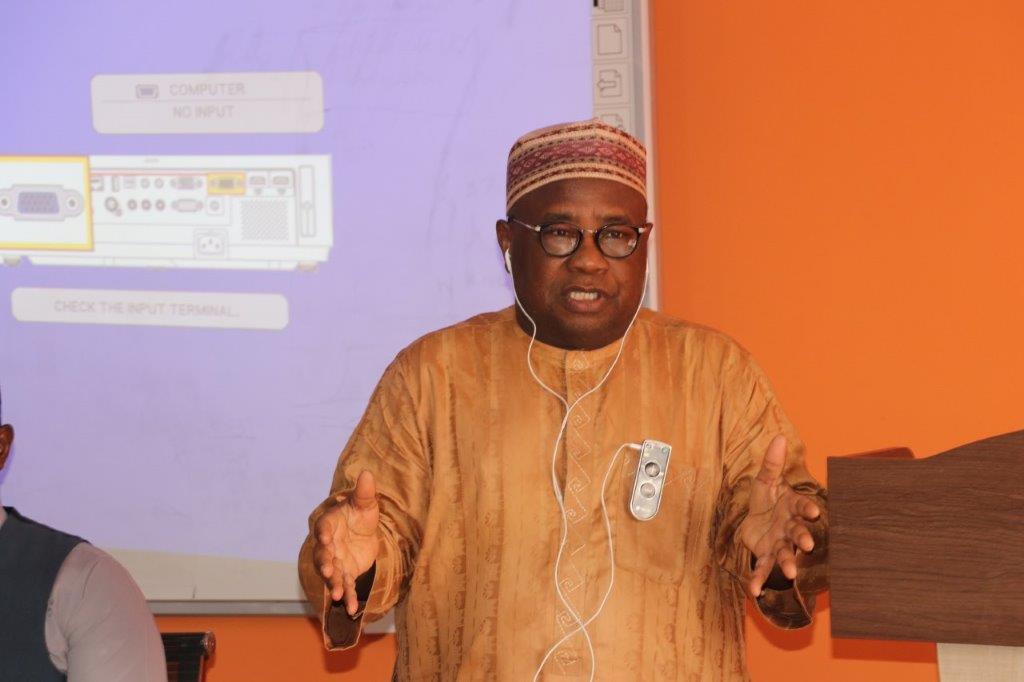
Professor Abdallah Uba Adamu, former Vic-Chancellor of National Open University (NOUN) and a media expert, says the great transformation of the Internet has enabled new platforms that are responsible for wealth creation, thereby replacing many informal forms of businesses and interactive engagements. For him, tech is now a commodity.  According to Prof. Uba, the Internet has facilitated the explosion of information and greater access to information and supported interfaces more than ever before. This development made the National Universities Commission (NUC) rethink the existing communication curriculum around Nigeria and hence its review, he said.  The media expert said this during the guest lecture he attended at Skyline University Nigeria where he addressed the students of the Mass Communication Department. He explained that media studies have changed over the years such that research has transformed to factor trending issues which the unbundling of Mass Communication seeks to address – B. Sc. Advertising, B.Sc. Development Communication, etc. His lecture titled ‘Nurturing Psychological Safety amid Curriculum Unbundling; Navigating the Career Choice, Changes and Opportunities for Mass Communication’ addressed the use of the internet and other technologies, and how the film industry has radically changed. He highlighted new opportunities that have surfaced on the Internet which has gained wide recognition and embrace by the general public – podcasts, video reels, and YouTube videos.  He adds that digital marketing has paved the way for more people to have a source of income and livelihood and this informed the academics to review the existing curriculum, to equip the youth with the right mechanism to provide engaging and informative content.  Delivering the closing remarks, Bashir Usman, a lecturer from the Department of Mass Communication at SUN said, that Prof. is a bridge between the old and new generations as he excellently keeps up with recent tech trends. Abubakar Usman, a level 100 student and participant in the lecture said that Prof. is truly an inspiration to the upcoming generation – the Gen Z. 

Tech is now a Commodity – Prof. Abdallah Uba Adamu Read More »

Most Valued Skills and Competence for International Business Managers in 2023

The modern working environment has changed dramatically over the past decade and this has major implications for global and international managers. Most firms currently operate in an exceedingly volatile, highly competitive, complicated, and dynamic environment. The need for new markets, cost constraints, increasing competition, and a number of governmental measures made possible by modern information and communication technology have all contributed to the globalization of business (Sealy, Wehrmeyer, France, & Leach, 2010). Such opportunities and pressures have created a serious challenge for multinational corporations. In addition to these external conditions, most organizations are also dealing with a number of global difficulties, such as those relating to talent flow, managing a diverse workforce, and a lack of specific competencies (Bucker & Poustma, 2010). Multinational corporations have become one of the most important drivers of continuous globalization and constant developments in the global economy. Doing business globally, across borders in diversified environments they have given rise to and put an emphasis on such concepts as “global managers” and cross-cultural management. Nowadays, international business managers have to deal with the difficulty of operating in a multicultural environment as a result of globalization, mergers, and acquisitions. Any function or role in international business entails collaboration with individuals from various nationalities and backgrounds. Understanding how to communicate across cultures is an absolutely essential ability, whether the person is a coworker, client, or consumer. It necessitates a significant level of diplomacy, respect, and sensitivity. It also requires making an effort to understand learn and appreciate cultural differences when it comes to communication. It can be easier to avoid misconceptions and promote better workplace communication if you are aware of, for example, how individuals from different cultures interpret workplace conflict or something as straightforward as maintaining eye contact. And effective communication helps businesses. (In fact, studies contend that one of the main causes of project failure is a breakdown in communication.) Building a strong network of connections outside of your native country is crucial if you want to engage in international business. Successful networking can lead to unexpected commercial opportunities abroad, and according to some reports, networking is now responsible for up to 80% of job placements. While online platforms like LinkedIn make it simpler to establish and maintain professional contacts abroad, excellent in-person networking abilities remain one of the most important traits for success in international business. One practical strategy to meet like-minded individuals and expand your relationships is becoming an expert at “elevator pitching” and attending industry networking events. Naturally, networking skills take tact, diplomacy, and a listening ear, just like cross-cultural communication; keep in mind that you’re creating a relationship rather than just selling your services. Building a network alone won’t be enough for success in international business; you also need to be able to get along with others. In the business world, it is essential to be able to cooperate and work together for the same goal. It necessitates modesty, allowing others to lead and share the spotlight when things go well. Collaborating with team members from different cultures is extremely advantageous in an international business environment. First, it’s a chance for you to practice and improve your cross-cultural communication abilities. Secondly, it will introduce you to new perspectives and approaches to addressing challenging business issues. The most motivating and effective corporate leaders are frequently the best collaborators because they are aware of how communal intelligence may hasten company achievement. Strong emotional intelligence is regarded as a crucial competency when it comes to conducting business internationally. This is so because it affects almost every facet of corporate communication. Emotionally intelligent people are in control and in control of their emotions, meaning they are able to adapt flexibly to change and react calmly in critical or stressful business situations. To succeed in international business unequivocally demands resilience and mental toughness. Ever-changing business demands, especially in International Business careers, throw a unique challenge to the manager at an individual level. Work timings, mental health, working environments, personal goals, physical health, social expectations, and work timings across different time zones, all take a toll on the person manning the station. Be resilient to such things that come your way. Setbacks and failures are also a fact in the business world, but defeat isn’t. This is where resilience comes into play. Resilience, which goes hand in hand with emotional intelligence, is a crucial quality for success because it enables you to rise to the unavoidable challenges of doing business globally, keep your motivation high, manage risks, and bounce back swiftly from hardship. Reference Sealy, I., Wehrmeyer, W., France, C., & Leach, M. (2016). Sustainable Development Management Systems in Global Business Organizations. Bucker, J. & Poustma, E. (2010). How to Assess Global Management Competencies: An Investigation of Existing Instruments Ms. Aisha Turaki Ibrahim is an Assistant Lecturer of the Department of Management, School of Arts, Management and Social Science, Skyline University Nigeria. She holds a Master’s Degree in International Business Management from Sheffield Hallam University (U.K) and a Bachelor of Science in Business Management from the American University of Nigeria (AUN). You can join the conversation on Facebook @SkylineUniversityNG and on Twitter @SkylineUNigeria   

Most Valued Skills and Competence for International Business Managers in 2023 Read More »

Skyline University Nigeria organizes Fresher’s Party for New Students 2022/2023 Academic Session

The Students’ Service Department of Skyline University Nigeria (SUN) has organized a fresher’s party for the new students 2022/2023 academic session. The event took place at the campus of SUN on May 28th, 2023. According to Ms Sarada Maganti, the Director of Academic Support Services (DASS), the party was organized to enable students to inculcate the spirit of togetherness and a strategic way for bonding. She also stated that the event is a way to help students unwind after weeks of lectures. The event included the selection and crowning of Mr and Miss Fresher, after an intense Fashion Parade and Questions and Answers series with each of the participants. The battle to secure the 1st position was contested by 6 male students from level 1 and 6 female students from level 1. The participants came from different departments at SUN. Mustapha Dantata, from the Department of Software Engineering level 1, emerged victorious after the rounds of the contest. He was then crowned Mr. Fresher of SUN 2022/2023. He said it was an exciting moment for him, one he’ll cherish for his entire life. On the part of the female contestants, Husna Aminu Yarima, a level 1 student from the Department of Physiotherapy gained victory and was crowned Miss Fresher of SUN 2022/2023. She said the event was indeed a memorable and sensational one.  The selection of the winners followed a rigorous process by the panel of judges. The judges that participated in the selection process were Miss Simran Sanjay Sharma, Zainab Naseer Ahmad, Khadija Hassan (Fandy) and Ms Maganti. The fresher’s party also included Solo Performances of artists and the Koroso Dance group.

Skyline University Nigeria organizes Fresher’s Party for New Students 2022/2023 Academic Session Read More »