Skyline University Nigeria

What diphtheria is and why we need to pay attention?

Introduction Diphtheria is a highly contagious infection caused by strains of bacteria called Corynebacterium diphtheriae, which produces a toxin that destroys healthy tissue within the upper airways causing a membrane to grow across the windpipe. It can also affect the skin causing blisters and ulcers. The disease spreads easily and happens quickly, and can affect all age groups, however unimmunized children, are particularly at risk. Moreover, adults over 60 years old, living in crowded or unclean conditions, and malnourishment are at risk for contracting the disease. In severe cases, the disease can lead to death due to damage to organs. Situation at a glance Although globally the incidence of diphtheria has reduced dramatically in the past five decades, recently, the Nigerian government confirmed the outbreak of diphtheria in 21 of the 36 states and the Federal Capital Territory. According to the Nigeria Centre for Disease Control and Prevention (NCDC), so far 1439 suspected cases of diphtheria have been reported, of which 557 (39%) were confirmed. Among the confirmed cases, 73 deaths (case fatality ratio of 13%) have been recorded due to the outbreak. Rural areas of Borno state were reported to be the most affected parts of the country in 2011. Modes of Transmission Diphtheria bacteria can be spread from person to person, usually through inhalation of airborne droplets, like from coughing or sneezing, or by direct contact with infected patients by mucous secretions or skin ulcerations. Sign and symptoms Symptoms of diphtheria depend on the body part that is affected. However, the upper airways and the skin are commonly affected. When the bacteria infect the airways, it can cause sore throat, mild fever, swollen glands in the neck (bull neck), barking cough, wheezing, difficulty in breathing, tachycardia (racing heart), and weakness. The bacteria produce a toxin that destroys the healthy tissues lining airways and within two to three days, the dead tissue forms a thick, grey coating that can build up in the throat or nose, which can cover tissues in the nose, tonsils, voice box, and throat, resulting in breathing and swallowing difficulty. If the toxin gets into the bloodstream, it can cause heart, kidney, and nerve damage. When the bacteria infect the skin, it can cause open sores or ulcers. However, diphtheria skin infections rarely result in severe disease. Diagnosis Diagnosis of diphtheria is made based on presenting signs and symptoms as described above, and a laboratory test. A swab sample is taken from the throat or a sore and analyzed for traces of Corynebacterium diphtheriae in the laboratory. Treatment The treatment for diphtheria should begin immediately, sometimes even before the laboratory test results are confirmed. Diphtheria antitoxin is typically prescribed to stop damage to the organs. In addition, antibiotics, commonly penicillin or erythromycin, are prescribed to fight infection. Individuals with diphtheria are kept in isolation to prevent others from becoming infected. However, an infected person is no longer contagious around 48 hours after taking antibiotics. Surgery may be done to remove the grey membrane in the throat, if necessary. Diphtheria recovery necessitates adequate bed rest and if the heart is impacted, it is very essential to avoid any physical activity. In the short term, patients may need to supplement their nutrition with liquids and soft foods due to pain and difficulty swallowing. When treatment is completed, a test is repeated to ensure that the bacteria have been eliminated. Once the bacteria are gone, a vaccine is administered to prevent future infections . Complications Diphtheria can result in several long-term complications such as blockage of airways, myocarditis (damage to the heart muscle), polyneuropathy (nerve damage), lethargy (sluggishness), paralysis (being unable to move), and loss of lung function. Prevention Prevention of diphtheria usually involves the administration of several vaccines, which are designed to prevent not only diphtheria but also to protect against multiple infections at once, such as pertussis (whooping cough) and tetanus. Centers for Disease Control and Prevention. National Center for Immunization and Respiratory Diseases (NCIRD) – Diphtheria.  World Health Organization. Disease Outbreak News; Diphtheria – Nigeria. Dr. Aminu Alhassan Ibrahim is a lecturer I in the Department of Physiotherapy, School of Basic Medical Science (SBMS), Skyline University, Nigeria. He obtained a Doctor of Philosophy (PhD) degree in Orthopaedic and Sports Physiotherapy from Bayero University, Kano, Nigeria, a Master of Physiotherapy (MPTh) in Orthopaedic Physiotherapy from SRM University, India, and a Bachelor of Physiotherapy (BPT) from Bayero University, Kano, Nigeria. You can join the conversation on facebook @SkylineUniversityNG and on twitter @SkylineUNigeria

What diphtheria is and why we need to pay attention? Read More »

SUN Staff visit Kurmawa Correctional Centre, train Inmates on Stress Management

The faculty staff of Skyline University Nigeria have visited Kurmawa Correctional Centre Kano Command as part of their community service Programme. Their visit was to conduct training for inmates on Stress Management and to provide support and valuable knowledge to help the inmates cope with the challenges of stress. The training was curated and delivered by Mr. Trimisiyu Lawal from the Department of Economics, Dr. Aminu Ibrahim from the Department of Physiotherapy, and Dr. Nasir Abdullahi  Department of Nursing to over 200 inmates. The SUN team was warmly welcomed by the Deputy Controller of Correctional, DCC Muazu Tukur. He gave an introductory briefing and lauded the management of SUN for supporting the Kurmawa Correctional Centre Kano Command through the wonderful initiative. Mr. Lawal commenced the session with a careful introduction to stress, its causes and possible ways to tackle it in English Language. He said managing stress is extremely important for the inmates especially due to their past realities. He also enumerated the necessity of equipping the inmates with practical techniques of stress management which they can implement, to cope with the challenges they face within the correctional facility. In his part, Dr. Abdullahi applauded the management of Kurmawa Correctional Centre Kano Command, for their keen anticipation and warm reception. As a professional psychiatric nurse, he said stress is associated with life-threatening ailments such as insomnia, depression and hypertension among others. He advised the inmates to be in total control of their emotions and take necessary steps such as simple exercises and interpersonal communication with fellows during his presentation in English Language. While presenting his part in Hausa Language, Dr. Ibrahim highlighted the importance of understanding the causes, symptoms, solutions and impact of stress particularly on the inmates. He stated that extreme cases of stress could lead to suicide if not managed effectively. He said he was absolutely fascinated by the level of understanding they expressed when he chose the Hausa Language to explain the concepts vividly. Dr. Ibrahim then thanked the management of the centre and DCC Tukur for easing the process of the training session. He said the team would convey the areas of collaboration highlighted by the management, particularly in ICT, Education and soft skills training. DCC Tukur sincerely appreciated the management of SUN for organizing the session for the inmates and is looking forward to future engagements.   You can join the conversation on Facebook @SkylineUniversityNG and on Twitter @SkylineUNigeria

SUN Staff visit Kurmawa Correctional Centre, train Inmates on Stress Management Read More »

Skyline University Nigeria conducts Strategy Summit 2023

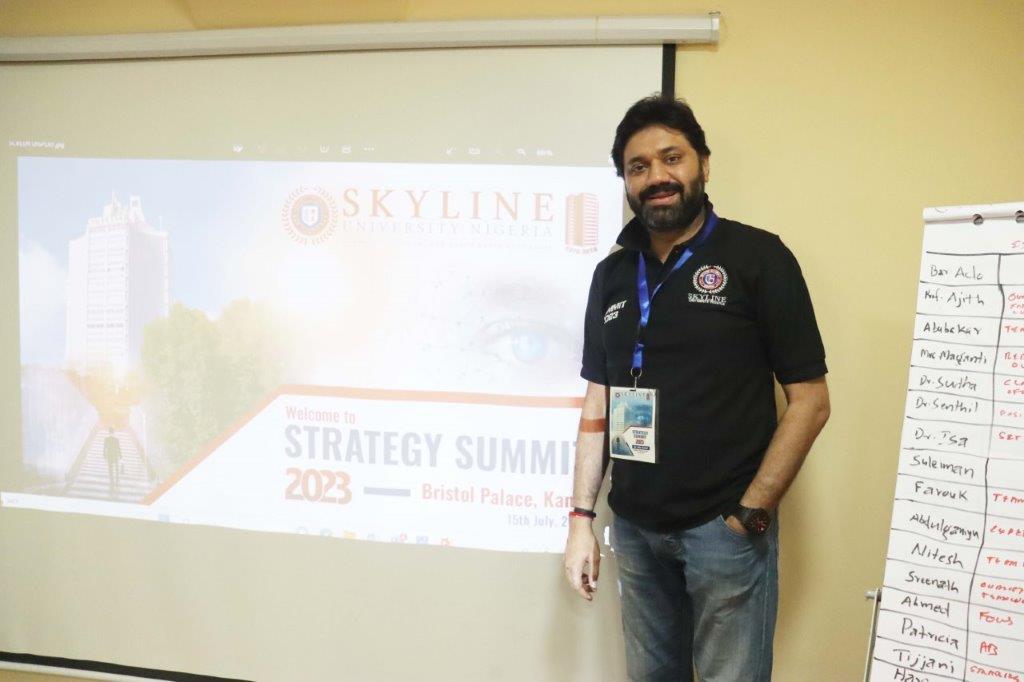
The management of Skyline University Nigeria (SUN) has recently conducted a Strategy Summit to enable staff to engage with one another and unveil areas of more collaboration, effective communication and team. The Summit, which was held at Bristol Palace Hotel in Kano State, was also organized to present activities that have happened during the last academic year by each department at the university. The Pro. Chancellor of SUN Mr. Nitin Anand who chaired the event, stated the importance of such gatherings as an avenue for the identification of a common goal, understanding and bonding for the institution’s staff. He highlighted that the congregation would definitely allow for the realization of the institution’s goals and objectives while charging the staff to be highly dedicated. In his presentation, the Vice-Chancellor of SUN Prof. Ajith Kumar V.V. said the university has achieved a great milestone during the academic year 2022/2023. Some of the notable milestones he highlighted included The NUC accreditation for additional courses, the marticulation ceremony, over 22 guest lecture series held for students, and some students of SUN emerging first and second runner-ups in the Tie MENA competition, among others. The Vice-Chancellor charged the staff to take responsibility and ownership of delivering tasks efficiently as well as be supportive of each other. He also charged the faculty to apply new methods of teaching so as to expose students to global standards of learning. The Director of Marketing (DOMC), Mr. Abubakar Sadiq Ismail who also presented during the strategy summit, said the past academic year has been quite eventful for the marketing department at SUN. He said the department anticipates more prosperous years ahead. The Director of Academic Support Services (DASS), Ms. Sarada Maganti while presenting her paper stated that loyalty and trust are two important elements that can strengthen collaboration in task delivery in the institution. She advised the staff to communicate effectively to ensure that services are rightly delivered to the students and stakeholders. Other key personalities that spoke during the event include the Dean of the School of Science and Information Technology (SSIT) Dr. A. Senthil Kumar, the Dean of the School of Social and Management Sciences (SAMSS) Dr. Sudha Mavuri, the Dean of the School of Basic Medical Sciences (SBMS) Dr. Isa Lawal, as well as representatives from Corporate Affairs and Centre for Continuing Learning (CCL). You can join the conversation on Facebook @SkylineUniversityNG and on Twitter @SkylineUNigeria

Skyline University Nigeria conducts Strategy Summit 2023 Read More »

Time Management in the Life of Academics

Time management is essential in the life of an academic. Because of the demanding nature of their work and the constant juggling of multiple duties, good time management becomes critical to ensuring productivity, balance, and personal well-being. According to Chansaengsee (2017), “We can prevent disappointment in life by practising time management. This letdown might come in the form of monetary, professional, social, or other types of disappointment. If we make time for proper planning, we can avoid all of these things at once. Everything in our existence is equally powerless.” Academics can maximize their performance while maintaining a healthy work-life balance by planning their time efficiently. Setting priorities is an important component of academic time management. They can build a clear roadmap for their work by identifying and categorizing tasks based on urgency and priority. Setting realistic goals and breaking them down into achievable chunks is part of this process. Academics can tackle the most important assignments with concentration and prevent unneeded stress by focusing on them first. Creating a set timetable also helps with time management. Setting out specified time slots for activities such as research, teaching, administrative chores, and personal commitments promotes order and discipline. Academics must set out time for focused work while minimizing distractions and disruptions. They can improve their productivity and avoid procrastination by sticking to a schedule. According to Chaudhari (2022), “We have to perform various activities in life. Some of them might be very important some of them might be less important. To perform all these activities time period is limited. If one performs any activity after the stipulated time it will be of no use. Hence for all of us, the work at the proper time is very crucial. Many times people often found complaining that they do not have time”.   Effective time management necessitates the ability to delegate and, when necessary, say no. Academics frequently face several pressures, such as collaborations, committee work, and social engagements. While it is critical to participate in these activities, it is also critical to evaluate their overall productivity. Academics can protect their time for crucial work and maintain a good work-life balance by learning to delegate responsibilities and politely decline non-essential commitments. Finally, self-care should not be forgotten when it comes to time management. Academics must emphasize their own well-being by making time for relaxation, exercise, and hobbies. This gives them the energy and focus they need to perform at their best. Academics can avoid burnout and maintain productivity in the long run by including self-care in their agenda and establishing a harmonic integration of work and personal life by setting priorities, making a disciplined timetable, delegating responsibilities, and emphasizing self-care. References Chansaengsee S. (2017). Managing time to contribute to the balance of life, work, school and life. Veridian EJournal, Silpakorn University, 10(5):20-34. Chaudhari, T.  (2022). Time management essentials and importance. International Journal of Commerce and Management Research. P. 6-8. Dr Abdulkadir is working at Skyline University Nigeria as Lecturer 1 in the School of Arts, Management and Social Sciences. He speaks two international languages; English and Arabic, and is an Alumnus of the University of Ilorin, Ilorin, Nigeria where he studied Political Science and International Relations for his Bachelor’s and Master’s Degree. 

Time Management in the Life of Academics Read More »

SUN organizes Professional Skill Development Programme (PSDP) for level 100 students

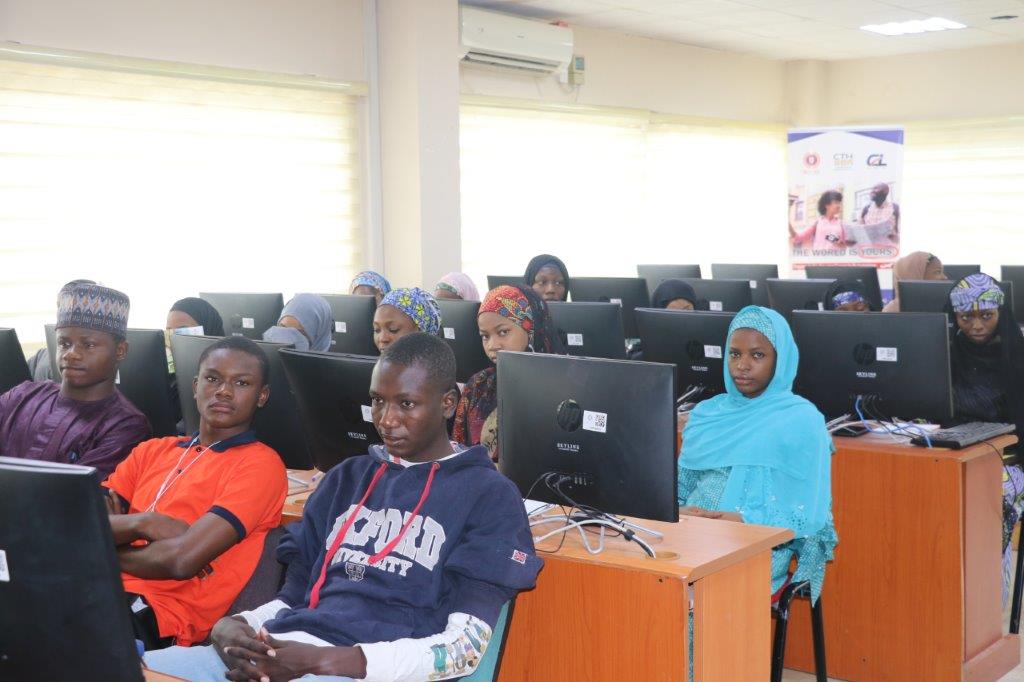
The Students Service Department of Skyline University Nigeria (SUN) has organized a Professional Skill Development Programme (PSDP) for the level 100 students currently taking their second semester at the campus. The session was organized to inculcate useful values in students that will help them have a fruitful stay at the university. Mr. Trimisiyu Lawal from the Department of Economics and Dr. Nasiru Abdullahi from the Department of Nursing at SUN lectured the students on the essential skills that would support their careers at the institution. While delivering his lecture titled ‘General Etiquettes and Team Work’, Mr. Lawal emphasized the importance of etiquettes as effective for achieving goals, maintaining relationships and building networks throughout tertiary education. He states, “Politeness will enable your success as students. Attitude plays a critical role in learning and that is transferable to what you are likely going to do after school”. He explained that these basic attitudes are critical for a successful higher education career. He adds that social norms guide our behaviors in certain ways and etiquette promotes teamwork. And, students have to restrict themselves from using derogatory or unbefitting words. With derogatory statements, no fruitful exercise will hold. The knowledge of these etiquettes applies to all kinds of engagements including classroom relationships. Mr. Lawal highlighted some useful etiquette for the students such as clear and concise communication, mutual respect, resolving conflicts promptly and recognizing achievements among others. In his lecture, ‘Survival Skills in a Tertiary Institution’, Dr. Abdullahi explained that higher education has numerous challenges. There are a range of skills and activities that will help students overcome what they will face. Some of the basic skills that are vital for students to succeed in their learning at the tertiary institution include class attendance, taking notes, the two-hour study rule, and keeping track of your progress, among others. Some students who attended the session expressed their satisfaction with the overall Programme and hope to apply all they have learnt.  You can join the conversation on Facebook @SkylineUniversityNG and on Twitter @SkylineUNigeria

SUN organizes Professional Skill Development Programme (PSDP) for level 100 students Read More »

AI and the Future of Higher Education

It is no more news that Artificial Intelligence (AI) is taking over our day-to-day activities. From medical operations to agricultural activities, manual labour in companies, and learning, AI-supported technologies are rapidly revamping daily routines in virtually all fields of endeavour. Machines and robots are replacing what human beings can do efficiently and faster. Hence, there’s a need to be a part of the early adopters in embracing these current tech developments. Failure to accept these techs will only stagnate our professional and personal development. With the dwindling economies globally, people and students who are oblivious to these innovations would be harmed as the demands of AI users will be high. In education particularly, the sector is consistently being bombarded with the creation of new Artificial Intelligence (AI) supported search engines and helpers that accelerate research, learning, and the development of new knowledge. When it comes to the production of new knowledge, researchers now have a variety of AI instruments that can aid their research processes with minimal errors and maximum results, since they can understand and generate results like humans. Chat GPT (Generative Pretraining Transformer) is one of the famous AI tools that is gaining recognition in the world of Higher Education. It can search for unique researchable topics and includes many available options that will align perfectly with the researcher’s quests in case he or she has a single research option. This ability saves a lot of time and energy that would be channelled towards selecting a researchable topic that would meet all the criteria of research. More so, it offers the availability to be on track while carrying out your research task or assignments or projects. Chat GPT has read thousands of books and articles, so it never gets dull of providing answers whenever it is asked. And, you have a lot of other exciting tools you can explore as you navigate your way around your career during your higher education. For literature searches, you can use research rabbit or connected papers. There, you’d find numerous publications relating to your field of study and these will save you a lot of stress of sifting through a humongous amount of journals and books in the libraries. As a student in higher education institution, you would also be needing support with editing because you would be challenged by grammar issues. Hence, Grammarly and Quillbot are there to enhance your written texts by highlighting your grammatical inconsistencies with alternative suggestions. These will greatly improve your projects while enriching our vocabularies and knowledge. These are just a few of the available AI support tools that are available to support higher education learning. There are available smartboards and Alexa Chatbot options for teaching in classrooms. These tools are now in use around world-class universities and some universities in Nigeria. Skyline University Nigeria uses these smartboards and Alexa Chatbots in its library to support a fruitful learning experience for students. This is very important as the methods expose them to contemporary styles of pedagogies similar to what is obtainable around the world. The recent AI transformation comes at a critical time when new knowledge is in demand every day. Since higher education is the bedrock of the production of new knowledge, it has to be at the forefront of championing the use and promoting the accessibility of AI tools. All sectors of human life are being engulfed by these recent technologies and for youths to remain relevant in a tech-driven world, higher education must incorporate AI tools in teaching and learning. In the coming years, Higher Education would benefit immensely from AI because it will simplify the methods of teaching and learning. It will help youths to efficiently pursue their careers with relative ease.  You can join the conversation on Facebook @SkylineUniversityNG and on Twitter @SkylineUNigeria

AI and the Future of Higher Education Read More »

Skyline University Nigeria student unveils an Online Food Products Delivery App

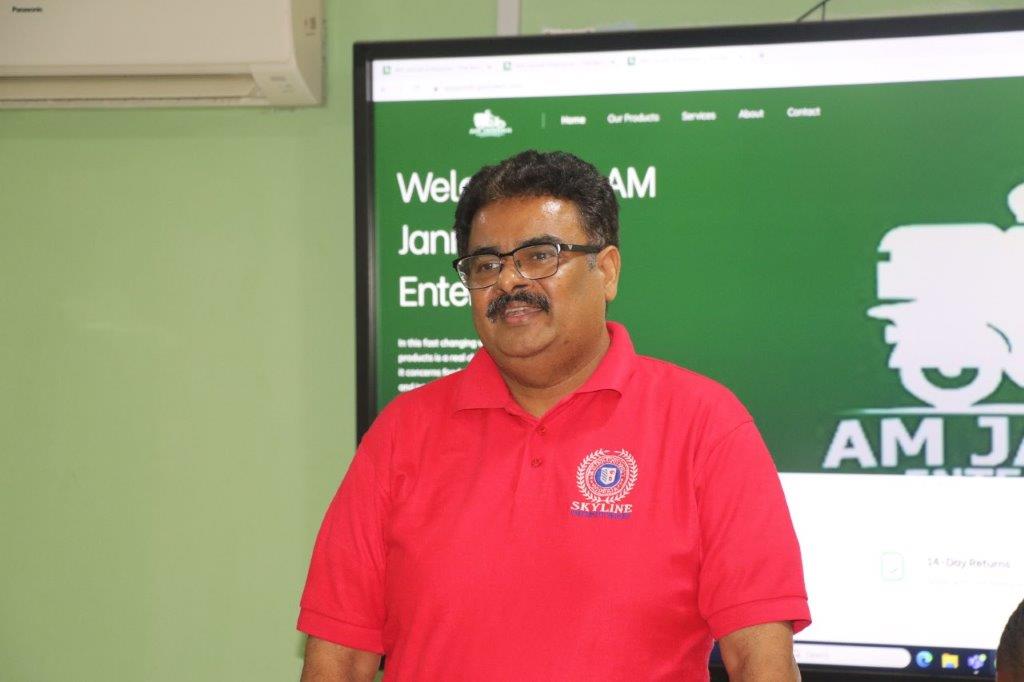
Aliyu Atiku, a level 200 student from the Department of International Relations at Skyline University Nigeria (SUN) has unveiled his Online Food Products Delivery Application. The application called AM Jannah Enterprises is one that can be utilized to order products such as milk, fresh fruits and vegetables, beef, fish and Chicken among a variety of food products. While presenting his speech during the event, the Vice-Chancellor of SUN Prof. Ajith Kumar V.V. said the idea of the business is quite innovative. To Aliyu, the VC said, “Your challenge starts now. This is because sustainability is difficult and there are a lot of challenges that are bound to disrupt entrepreneurship activities”.  The VC also encouraged Aliyu to explore opportunities provided by government agencies and other organizations that have schemes for start-up businesses like his. He highlighted the Small and Medium Enterprises Development Agency of Nigeria (SMEDAN) as one of those agencies that are doing really well in supporting youths in business development and expansion. In her remarks, the Dean of the School of Management and Social Sciences (SAMSS) Dr. Sudha Mavuri congratulated Aliyu. She said his achievement is monumental for SUN and the University’s Centre for Excellence. According to one of his mentors, Prof. Sanjoy Kumar Pal, the university is now awaiting a positive response of progress from Aliyu after a few years of his business. Aliyu thanked the VC, Deans, HODs and all the staff of Skyline University Nigeria for supporting him until he realized his dream. You can join the conversation on Facebook @SkylineUniversityNG and on Twitter @SkylineUNigeria        

Skyline University Nigeria student unveils an Online Food Products Delivery App Read More »

Application of Solar Energy Products as an Alternative for Conventional Energy

Introduction Solar energy products (SEPs) serve as a sustainable and environmentally friendly alternative to conventional energy sources. Solar power harnesses the energy from the sun and converts it into electricity, reducing reliance on fossil fuels and minimizing carbon emissions. Solar energy products harness the power of sunlight and convert it into usable electricity or other forms of energy. These products have gained significant attention and popularity as a clean and renewable energy solution, offering numerous benefits over conventional energy sources.  Solar energy products have great potential for implementation in Nigeria due to its abundant solar resources. SEPs offer numerous benefits as an alternative to conventional energy sources: Renewable and Sustainable: Solar energy is derived from the sun, which is an abundant and renewable resource. It doesn’t deplete natural resources or contribute to climate change like fossil fuels. Environmentally Friendly: Solar power produces no greenhouse gas emissions or air pollutants during operation. Using solar energy helps reduce carbon footprints and mitigates the negative impacts of conventional energy generation. Cost Savings: Although solar energy products may have an upfront cost, they can lead to significant long-term savings on electricity bills. Once installed, solar panels and other solar products require minimal maintenance and have a lifespan of 25 years or more. Energy Independence: Solar energy enables individuals and businesses to generate their electricity, reducing dependence on utility companies and providing greater energy independence. Job Creation: The growth of the solar energy industry creates job opportunities in manufacturing, installation, maintenance, and research, contributing to economic development. Implementation of solar energy products in Nigeria The Nigerian government has recognized the potential of solar energy and has taken steps to promote its implementation. Initiatives such as the Nigerian Solar Home Systems Naija (SHSN) Programme and the Rural Electrification Agency (REA) have been launched to accelerate the deployment of solar energy products across the country. However, challenges such as financing, regulatory frameworks, and technical expertise need to be addressed to fully harness the potential of solar energy in Nigeria. Continued investment, policy support, and partnerships with the private sector can further drive the adoption of solar energy products and contribute to sustainable development in the country. Ventures where the solar energy can be used in Nigeria Nigeria has a significant rural population that lacks access to reliable electricity. Small solar home systems and mini-grids can power homes, schools, healthcare centers, and other essential services, improving living conditions and fostering economic development. Solar power can be integrated into Nigeria’s existing electricity grid. This can help diversify the energy mix, reduce dependence on fossil fuels, and enhance grid stability. Nigeria faces water scarcity and unreliable access to water in many regions. Solar-powered water pumps can extract water from boreholes, rivers, or wells for irrigation, livestock, and domestic use. Solar-powered street lights can provide reliable and cost-effective lighting for roads, highways, and public spaces in Nigeria. They eliminate the need for expensive electrical infrastructure and reduce energy costs, enhancing safety and security during nighttime hours. Solar power can be integrated into telecom towers, replacing or supplementing diesel generators. Solar-powered telecom towers reduce operational costs, improve network reliability, and reduce carbon emissions associated with conventional power generation. Solar systems can provide energy for lighting, medical equipment, vaccine storage, and communication devices, enabling better healthcare delivery, especially in emergencies and off-grid locations. Training Programmes can be initiated to educate individuals and communities about the benefits, installation, and maintenance of solar energy products. This can create a skilled workforce and empower communities to embrace renewable energy solutions. Conclusion SEPs offer a compelling alternative to conventional energy sources. SEPs serve as a compelling alternative to conventional energy sources. With their renewable nature, minimal environmental impact, and potential for cost savings, solar energy products offer a sustainable and viable solution for meeting our energy needs. By embracing solar power, we can reduce reliance on fossil fuels, mitigate climate change, and foster a cleaner and more resilient energy future. The widespread adoption of solar energy products holds immense potential to transform our energy landscape and create a more sustainable and greener world. Reference https://www.openpr.com/news/1682470/solar-power-products-market-to-witness-steady-growth-at-13-cagr-during-2019-2025-with-leading-vendors-like-scorpius-trackers-fourth-partner-energy-waaree-energies-elecomponics-technologies-vikram-solar-tata-power-solar-systems.html https://assets.cdcgroup.com/wp-content/uploads/2020/03/25194146/What-is-the-impact-of-solar-home-systems-in-Nigeria.pdf https://rea.gov.ng/ Dr.S.SENTHILKUMAR, currently working as Assistant Professor in Finance and Management, Skyline University, Nigeria. His qualifications are MBA, M.Com, M.Phil, MS, and PhD. He has rich experience in teaching and academic of 18.2 years.  He had published 58 papers Publications in National and International Journals and Proceedings.  You can join the conversation on Facebook @SkylineUniversityNG and on Twitter @SkylineUNigeria

Application of Solar Energy Products as an Alternative for Conventional Energy Read More »

Exploring Ethical Hacking with C: Unleashing the Power of the Programmeming Language

Introduction: Ethical hacking, also known as white-hat hacking, involves using hacking techniques and tools for legal and legitimate purposes, such as identifying vulnerabilities in computer systems to improve security. While C Programmeming language can be used for various purposes, including low-level system Programmeming, it is not typically the language of choice for ethical hacking due to its complexity and lower-level nature. Hacking Tools using C: The C Programmeming language is suitable for ethical hacking as it helps access memory and system processes. However, if you still want to explore using C for ethical hacking, here are a few concepts and tools commonly associated with ethical hacking that can be implemented using C: Network Analysis: C can be used to build network analysis tools to monitor and analyze network traffic, identify potential security risks, or detect network anomalies. Cryptography: C provides libraries and functions for implementing cryptographic algorithms, which can be useful in securing communication channels or analyzing the strength of existing cryptographic systems. Exploit Development: C can be utilized to develop exploits for known vulnerabilities in software or systems, although this requires advanced knowledge of memory management and assembly language. Packet Manipulation: C can be used to craft and manipulate network packets, enabling you to perform activities such as packet injection, packet sniffing, or protocol analysis. System Security Auditing: C can be used to build tools for auditing system security, such as scanning for open ports, checking for misconfigurations, or searching for common vulnerabilities. Conclusion: It’s important to note that ethical hacking should always be conducted within the boundaries of the law and with proper authorization. Engaging in any unauthorized hacking activities, regardless of the Programmeming language used, is illegal and unethical. References: 10 Best Programmeming Languages for Ethical Hacking – https://www.bestcolleges.com/bootcamps/guides/best-Programmeming-languages-ethical-hacking/#what-are-Programmeming-languages The 5 Best Programmeming Languages for Hacking in 2023 – https://www.simplilearn.com/tutorials/cyber-security-tutorial/Programmeming-languages-for-hacking

Exploring Ethical Hacking with C: Unleashing the Power of the Programmeming Language Read More »

ITF Officials pay a Courtesy visit to Skyline University Nigeria

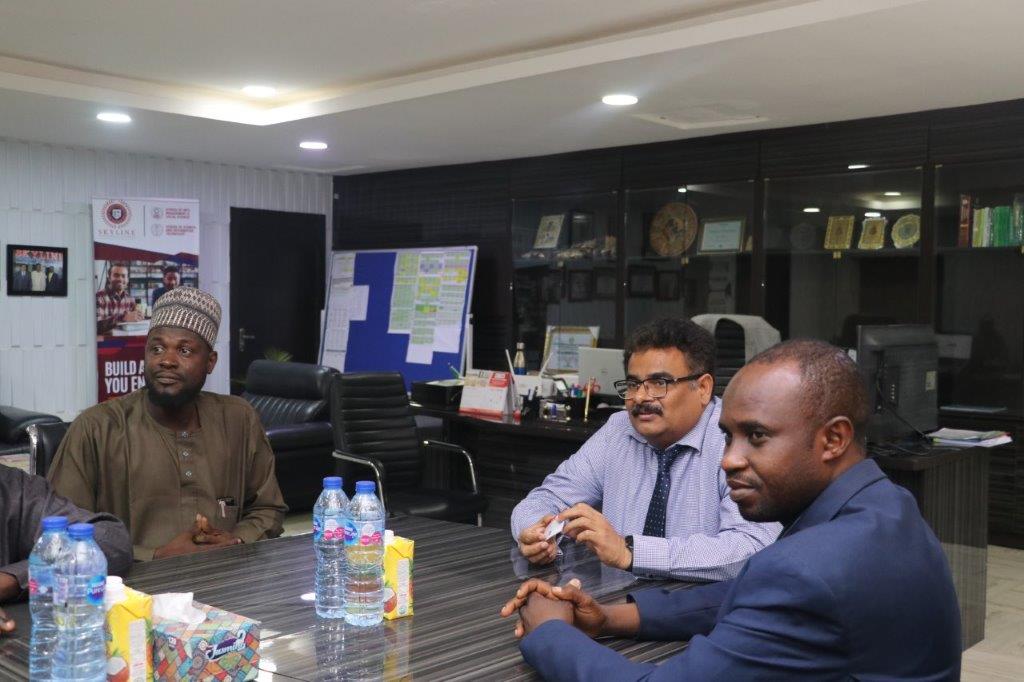
Industrial Training Fund (ITF) officials have paid a courtesy visit to the management of Skyline University Nigeria (SUN). The visit was to enable familiarity and discuss more areas of collaboration between the university and ITF.  In his opening remarks, the Vice-Chancellor of Skyline University Nigeria (SUN), Prof. Ajith Kumar V. V., said the management was excited to receive the ITF officials. He said their visit came at a strategic time for the university, as it crosses over 5 years of establishment. The institution is continuously incorporating recent global trends in technology and innovation in teaching and learning, he said.   He added that the university currently has 174 students on the Students Industrial Work Experience Scheme (SIWES) spread across 11 states in Nigeria including the F.C.T. He also said that the students have been rightly placed in several organizations to learn the necessary skills that would support their distinctive careers.  On his part, Mr. Abba Ibrahim Wada, the Head of Training at the ITF office in Kano State said their visit was to commend the management of SUN, for its unrelenting support in enabling students to have fruitful SIWES experiences as they prepare for future tasks.   Mr. Ibrahim said ITF is pleased to understand that the university is focused on the effective supervision of the students at their various places of work, to make them productive and functional after the completion of their degrees.  The Vice-Chancellor then appreciated ITF for its continuous support towards the development of students’ careers and assured them of the university’s effort to inculcate employability skills in them so that they become job creators and not job seekers. 

ITF Officials pay a Courtesy visit to Skyline University Nigeria Read More »