Skyline University Nigeria

IR Students Leads Round Table Seminar on the Role of Good Citizen

To ensure a sufficient grasp of the concept of Citizenship in Nigerian Democracy, students of the International Relations (IR) of the Political Science department of Skyline University Nigeria have initiated a round-table seminar to share expert advice on relevant national trends. The event with the theme, “The Role of Good citizen in Nigerian Democracy”, offered an opportunity for students to engage in lively, informal dialogue about important topics in politics, the international arena and society. The event which began with a brief introduction by the the Head of Department of Political Science and Coordinator of the event, Mr Frid Illo was opened for further discussion by the presenters. The presenters, Fatima Abdulrahman, Ibrahim Bukar, Abdulrahman Mohammad, Maryam Nasir, Fatima Dandawaki and Fatima Zubair took turns making their presentations. The presenters discussed at length, democracy as a concept, the nature of democracy in Nigeria in the 4th Republic from 1999-till date; Challenges of Nigeria’s democracy: Issues like corruption, bribery election rigging and lack of accountability and perspectives; Individual roles as a citizen in these challenges, how an individual can become part of the solution to the challenges in Nigeria; Possible solution to the challenges, amongst others. The Round-Table seminar brings politics, education, health, business and an array of relevant issues together to provide students with an opportunity to debate and pursue their common goals. At the close of the event, the students adopted a joint declaration outlining common priorities for the future of Nigeria, broadly making commitments to invest in, education, science, technology and skills development; Peace, Security and Governance, amongst others.

IR Students Leads Round Table Seminar on the Role of Good Citizen Read More »

Microbiology Students Observed World AIDS Day 2022

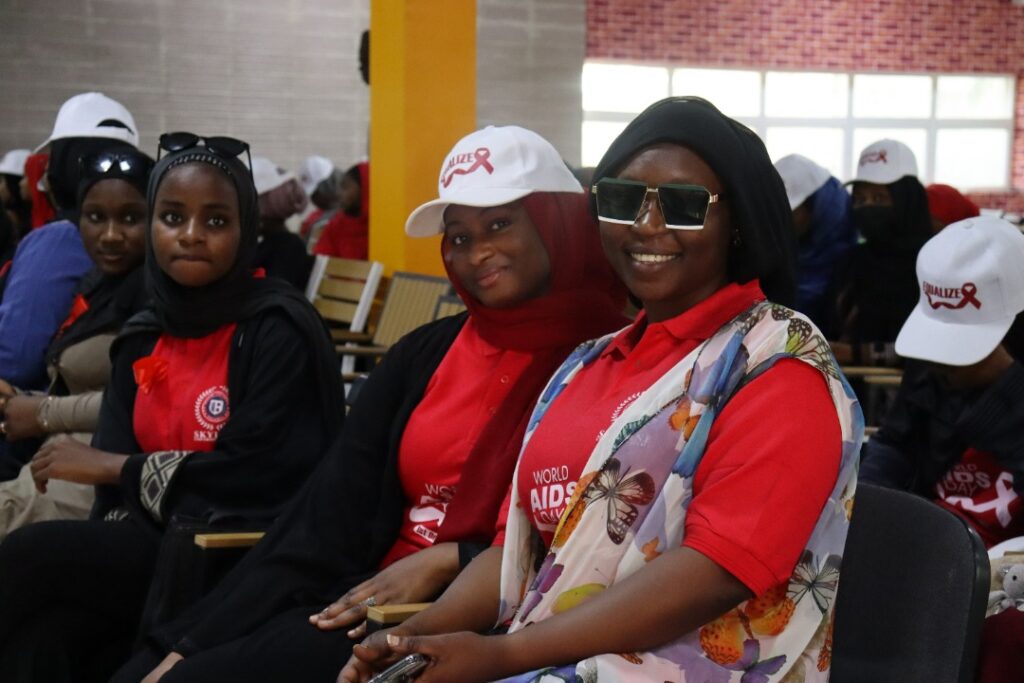
Students of Microbiology Department, Skyline University Nigeria (SUN), have led initiatives to throw awareness about the importance of World AIDS Day. The event was planned and organized by the students with special features, including presentations by the students, drama, posters competition, seminar, rally and voluntary HIV Tests for both students and staff of the University.  World AIDS Day is observed annually on December 1. This year’s event gave the chance for students to raise awareness, which drew a lot of attention on the University’s Campus, given the students’ participation in highlighting the growing inequalities in access to essential HIV services. The students were actively supported by the Dean of the School of Science and Information Technology (SSIT), Dr A. Senthil Kumar and the Head of the Microbiology Department, Dr Sanjoy Kumar Pal, amongst other faculty, notably Dr Haliru Musa, Ms Hafsah Muhammad Ahmad, Abdulsalam Mustapha and Ms Aisha Turaki, Ismail Rabiu, Mr Abdurrzak Mohammad and Mr Ismail Rabiu. While making his remarks at the event, the Dean of SSIT, who applauded the students for hosting such a life-changing event, stated that HIV remains a major public health issue that affects millions of people worldwide. He added that it is our collective responsibility to support people with the illness. “Let us do what we can to support the community to eradicate these illnesses”, he said. The event was closed with a rally by the students on the awareness of AIDS.

Microbiology Students Observed World AIDS Day 2022 Read More »

Skyline University Nigeria Graduates 15 Physically Challenged Students of its Educate Community Programme

Skyline University Nigeria in collaboration with Site Savers and Kanova educational foundation Nigeria has graduated 15 students from its Educate Community Programme. The students, composed mainly of three different types of disabilities including visually impaired, hearing impaired and physically challenged, were awarded a Diploma in Computer Science. The Educate Community Programmeme is a part of the Corporate Social Responsibility initiative of the university centred on the education and training of the physically challenged in society. The students were trained with basic computer skills required for self-sustainance and progress in their careers. The graduation ceremony, which was held on Tuesday, 29th December 2022, was the second in the history of the university. According to the Course Coordinator, Dr Vijay Arputaharaj, the training in ICT, Managerial skills, a Business plan set-up, as well as Industrial Training is anchored on the university’s vision to develop the knowledge, skills and competency of all stakeholders. The Vice-Chancellor, Dr Ajith Kumar V.V, making his address at the ceremony, informed the awardees of some of the landmark achievements of the University, which were quite remarkable in ensuring the successful completion of their Programmeme “We are happy to carry out this Programmeme successfully for the second year”, adding that computer science and it’s applications in MS office is very important for the future and career building. Two of the graduating students, Auwal Ismail (Hearing Impaired) stated that Skyline University Nigeria is the only institution/organization that supports physically challenged students to visualize and learn computers. Another student, Abubakar Nura (Visually impaired) stated that the dream of many visually challenged students comes true when they come to Skyline University Nigeria, as they can find themselves working with the computer like normal people. Other distinguished speakers who made remarkable contributions at the ceremony, were the Deans of various schools, (Dr A. Senthil Kumar, Dr Sudha Mavuri, Dr Isa Usman Lawal, the Registrar, Mr Aliyu Haruna, the Director of Academic Support Services, Ms Sarada Maganti, etc.  

Skyline University Nigeria Graduates 15 Physically Challenged Students of its Educate Community Programme Read More »

Skyline University Nigeria Donated 10,700 Books to 65 Institutions of Higher Learning

In three years, beginning from November 2019, Skyline University Nigeria through the University Library has adopted consensus to support the transformation of education in Nigeria and the world over through the donation of library materials to institutions of higher learning. Sixty-five higher institutions comprising universities, colleges of education, and polytechnics across Nigeria have received the donated books so far. This commendable feat is another milestone that the university has been able to accomplish within the short period of her existence. While disseminating the records of donations, the Assistant Librarian of the University, Mr Musa Mohammed said, “Skyline University Nigeria has made a huge impact with this gesture, donating information resources amongst the institutions of higher learning”. He added that the donations are one of the university’s contributions to the growth of education in Nigeria. Mr Musa stated further that the library is at the forefront of providing information services to her respective university community which comprises students, faculty and other members to support their teaching, learning and research needs. “We hope that the donations will be judiciously used for the promotion of quality education in Nigeria”, he added. Skyline University Nigeria Library provides access to quality resources and innovative services to stimulate creativity, and intellectual curiosity, and facilitate lifelong learning and research within its community.

Skyline University Nigeria Donated 10,700 Books to 65 Institutions of Higher Learning Read More »

New Biomolecules through Evolution

Biomolecules are made in the living system and some of the Biomolecules which find applications are made in the laboratory/industry. Biomolecules can be synthesized by using pure chemical methods (synthetic) or pure biological methods or sometimes, a mixture of both chemical and Biological Procedure (semi-synthetic). Biomolecules which are available in the natural environment have been engineered by using synthetic, semisynthetic or pure biological methods which are usually called genetic engineering. But a very novel biological method using the concept of evolution had been developed by scientist Frances Hamilton Arnold, Linus Pauling Professor of Chemical Engineering, Bioengineering and Biochemistry at the California Institute of Technology (Caltech) which is called as Directed Evolution (DE) for the engineering of Protein molecules (Protein Engineering). Development of this technology has been awarded Nobel Prize in Chemistry in 2018. Directed evolution is an iteration of the natural evolution cycle in a laboratory (Evolution in vitro). Three processes occurred in a natural Evolution: variation between replicators and the variation causes fitness differences upon which selection acts, and accumulated variation is heritable. In DE, a single gene is evolved by iterative rounds of error-prone mutagenesis, screening, followed by amplification. Rounds of these steps are typically repeated, using the best variant from one round as the template for the next to achieve stepwise improvements. The likelihood of success in a directed evolution experiment is directly related to the total library size, as evaluating more mutants increases the chances of finding one with the desired properties (1). An example of directed evolution with comparison to natural evolution. The inner cycle indicates the 3 stages of the directed evolution cycle with the natural process being mimicked in brackets. The outer circle demonstrates steps in a typical experiment. The red symbols indicate functional variants, the pale symbols indicate variants with reduced function. Directed evolution is frequently used for protein engineering as an alternative to rational design, but can also be used to investigate fundamental questions of enzyme evolution (1). References:(1) https://en.wikipedia.org/wiki/Directed_evolution.(2) https://sciencebriefss.com/dictionary/directed-evolution Dr. Susanta Pahari is a Professor of Biochemistry in Skyline University Nigeria. He has a PhD. in Biochemistry from University of Calcutta, India. You can join the conversation on facebook @SkylineUniversityNG and on twitter @SkylineUNigeria

New Biomolecules through Evolution Read More »

Department of Political Science Holds Guest Lecture on Becoming a Diplomat

His excellency, Amb Samaila Yusuf Abba during the recent guest lecture of skyline University Nigeria, shared the practical aspect, and nature of the conduct of the art of diplomacy.  His Insight on the Practice of Diplomacy  The practice of diplomacy is not alien to human existence, since human beings can’t exist in isolation. States like human beings need one another to be able to actualize their primary purpose of existence, which is the protection and promotion of territorial integrity of their domain for citizens’ wellbeing. Thus, the metrics at which diplomatic practice flourishes are predicated upon multiple factors; Developing interest and passion for the art and craft of diplomacy and international relations. Wide knowledge of diplomatic history with particular reference to one’s country. Possession of analytical skills and temperament. Ability to write well and quickly. Be verbally fluent and explanatory. Demonstration of meticulous attention to detail. Be a firm and effective negotiator. Ability to politely speak one’s opinions to power, and  Other sterling qualities. Over time, the functions of diplomats have oscillated between representations, negotiation, and promotion of friendly relationships with other countries, protecting citizens living abroad, and collation and analysis of information as connected to the socioeconomic, political and security interests of their countries. It’s no longer gainsaying that the emergence of globalization and communication networks have profoundly changed the face of diplomatic practice in the 21st. The 21st-century diplomat needs to adapt his or her role in consonance with these continuously and rapidly evolving changes. This brings us to some of the challenges faced by a 21st-century diplomat His perspective on the Challenges of diplomacy in the 21st century.  The challenges of diplomacy in the 21st century are enormous, it will be good if we limit ourselves to those that clog the wheel of foreign policy in our immediate environment. These include; Globalization: The world is fast becoming a global village with socio, political, economic and health challenges. Since state actors need to work closely together with other actors, international laws are needed. Some of these international laws slow down the engagements of diplomats in the international system.  Social Media: Social media has proven to be a hard nut to crack in carrying out the diplomatic practice. Even before proceedings and resolutions of bilateral or diplomatic engagements are officially documented and communicated with the parent country, social media has perverted virtually all the outcomes of the engagement. This ordinarily presents diplomats as dragging vital information that requires to be heard from them first-hand. Insecurity: Today, there are lots of local, national and even international restiveness all over the world. The international community will always be trying to resolve this challenge by using diplomacy. So, rather than pushing ahead with other vital and progressive agendas, diplomats are deterred by the responsibility of attending to insecurity issues. Conclusion and Recommendations Narrowing the gap between reality and perception, it is essential for all international actors to be well understood, correctly analyzed and properly assessed. To do this right, a student aiming to become a good diplomat in the 21st century needs to be; Smart, particularly assertive and innovative.  Competent in the gathering and use of information. Give suggestions to state actors on the need to be at peace with their immediate neighbours. Diplomats should rely on a clear political will and desire to resolve a problem on mutually beneficial conditions. Well, articulate in communication and representation. 

Department of Political Science Holds Guest Lecture on Becoming a Diplomat Read More »

Skyline University Nigeria organized a “Road Safety Awareness Campaign”

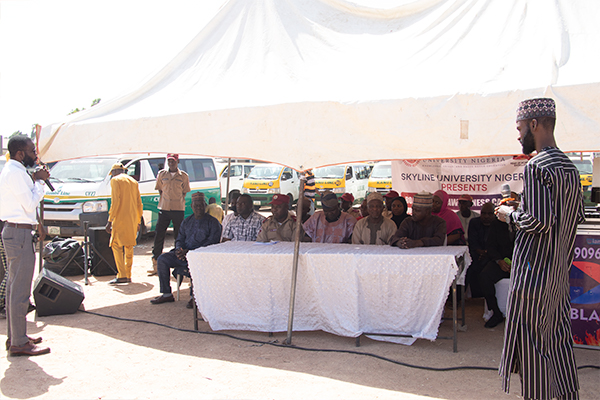
Skyline University Nigeria organized a “Road Safety Awareness Campaign” for motorists in the Kano metropolis. The awareness campaign tied with Sustainable Development Goal 11 (Sustainable cities and communities) is in furtherance of the community development service of the University. The Programme began with a Jumaat prayer well attended by officials of the Federal Road Safety Corps at Skyline University Mosque on Friday, November 18, 2022. The grand finale came up on Monday, November 21, 2022, at the Kano Line Motor Park, Naibawa Kano. The Public Relations Officer of FRSC identified human factors, mechanical factors, and environmental factors as the major causes of road crashes. The Leaders of the Drivers Union commended the laudable initiative of Skyline University Nigeria in ensuring the safety of motorists and commuters.

Skyline University Nigeria organized a “Road Safety Awareness Campaign” Read More »

Can bacterial cells be used as computer storage devices?

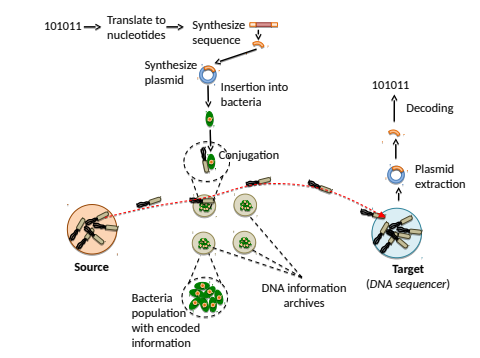
The idea of using bacterial cells for storing information has been thought of for a long time. This idea was a result of the large quantity of new information rapidly generated on a daily basis [1]. At present, the International Data Corporation (IDC) estimated that on a daily basis, about 2.5 quintillion bytes of data are generated, much of which is machine and human-generated data, and the pace is rapidly accelerating. The IDC further estimated that by 2025, newly generated data up to 180 zettabytes (ZB) orbytes 1.8 x1023 bytes will be created. These figures are very large to fathom. To perfectly understand these large estimates, the estimates exceed the radius of the observable universe which is 43 x 1021 km, exactly two orders of magnitude lesser than the said estimate of bytes [2]. The use of machine learning techniques has further intensified this need for an alternative means of storing a large volume of information. This technique entails the use of social networks, and navigation systems that run over big volumes of data. To end this problem of data storage, alternative means of information storage are required. One promising solution is the use of bacterial Deoxyribonucleic acid (DNA). This storage technique uses non-motile bacteria and the information to be stored is digitally encoded. The whole process works by the use of bacterial Nano networks which allow for molecular communication [3]. As technological advancement continues to move in a rapid manner, as evident by the high technology computers and phones we use, which come with high resolution cameras, that continue to consume much space, there is the fear that if an alternative as well as a sustainable means of data storage is not devised, the breakthrough in the technological industries will be halted, and this might affect the computer/electronic industries as well as global economies. This challenge has made researchers dwell into finding alternative ways of data storage, which entails the use of bacterial cells. This might not be in connection with the obvious fact that bacteria retain the credit of one of the most abundant life forms on earth with the ability to grow into millions within just 18 to 24 hours. Of all the bacterial cells on earth amounting to  bacterial taxonomists argued that only about less than 5% have been discovered. This 5% is thought to reach hundreds of thousands of different bacteria each with unique distinguishing properties the diverse groups of bacteria, the bacteria Escherichia coli, usually abbreviated as E. coli has proven to be the most promising candidate in DNA Molecular Data Storage Systems.  The bacteria (E. coli) remains the only bacteria whose genome (a pool containing all the genetic elements of a cell) has largely been studied, this allows for the modification via the alteration of given cell properties. This often results in many breakthroughs in the field of Microbiology, from gene therapy, production of recombinant vaccines and single-cell proteins, and Bacterial intelligence, a technique that integrates cell Programmeming with genetic circuit which allows for the E. coli cell to solve the diverse classical problem in artificial intelligence that today are solved by computers [3], and many more techniques to be available in the near future. The bacterial DNA encodes all the genetic information encoded by the cell which comprises all the cell characteristics and is capable of replicating in other for the cell to maintain its generation. This is achieved as the cell continues to grow. In bacterial cells, growth is defined as an increase in the number of cells as opposed to an increase in size. This storage technique offers numerous advantages, as the copy of stored information increases as the bacterial cells grow. This generates many different copies of a single data that is stored, hence decreasing the likelihood of missing information. More so, this storage technique offers the opportunity to store condensed information with long-term stability. Before now, the main challenge faced by Molecular Microbiologists and other Bioinformaticians is the means by which this information can be safely retrieved. However, subsequent studies on Microbial genetics and molecular biology approach were able to provide solutions to these problems as scientists were able to find a more promising technique of data retrieval of all stored information via the use of genetically engineered motile bacteria, which handle the task of reading operations. Although reading operations has been identified as a solution to the problem, the challenge now is how the entire reading process of the encoded information can be automated, especially if the stored information is archived all together. Recent developments in bacterial studies suggest the use of molecular communications which uses the cell molecular signaling mechanisms via a quorum sensing approach. In this approach, the bacterial DNA is seen as the software whereas the whole cell is seen as the hardware component. The whole idea of the use of bacteria as storage devices (Biostorage) employs the use of bacterial nanonetworks (figure 1) along with some plasmids. The plasmids are extra chromosomal material containing some set of information, that confer on bacteria some given properties. In this technique, the plasmids are encoded with some set of needed digital information usually from an archive library and the engineered bacteria (E. Coli) are made to pick up those plasmids. The plasmids will then deliver the encoded information into the cell for sequencing operations and then decode the information. Simulations (imitation of the operation of a given system) are then employed to assess how the information is transferred into the cell as well as assess how it affects the E. coli cells as it is assembled towards a given destination in the cell. To assess the ability of the bacteria to pick the data of choice for storage, as well as the retrieval of the archived information, techniques such as; Molecular Positioning System, digitally encoded-DNA archive system, System validation, and Wet lab experiments (figure 2 and 3) must be taken into consideration. Figure 1: Overall system architecture of the DNA archival system that enables reading using bacterial nanonetworks.

Can bacterial cells be used as computer storage devices? Read More »

NUC Grants Skyline University Nigeria Permanent License

The regulatory body for university education in Nigeria, The National Universities Commission, (NUC) has granted Skyline University Nigeria a PERMANENT LICENCE as a Private University following the expiration of the probation period within which the university has operated. The license was received on 15th November 2022 sequel to the recent NUC visit on the status of the University’s license. This is an attestation that the commission was satisfied with the efforts made by Skyline University Nigeria to meet the requirements as described by the commission for the issuance of a permanent operating licence. The Vice-Chancellor of Skyline University Nigeria, Prof. Ajith Kumar V.V made this public while reiterating the importance of teamwork amongst the staff and faculty of the university. He advised stakeholders of the university to continue to execute qualitative university education on students to compete with their counterparts across the globe.  Receiving the license on behalf of the University, the Pro-Chancellor Mr Nitin Anand, expressed satisfaction with this milestone being achieved. According to him, this will solidify the university’s position as one of the universities in Nigeria that meets quality standards. He added that this new development will enhance the educational quality of the university, ensure consistency in institutional operations, promote self-evaluation and institutional improvement, as well as provide for public accountability within a peer-review framework”. It should be recalled that Skyline University Nigeria receive its provisional license earlier in 2018. Since then, the university has become a place for techno-creative education, providing space for students to develop freely, connect with people they knew nothing about and establish great rapport. Friends and faculty became sources of inspiration, Campus became a space for creative thinking and support, not only for personal but professional goals. Speaking on the provision by the NUC, the university’s Director of Marketing and Communications, Mr Abubakar Sadiq Ismail, who accompanied the university’s Pro-Chancellor, congratulated the university for this milestone achieved. “Congratulations to Skyline University Nigeria as you continue the quest to provide knowledge, skills and value-based education while maintaining acceptable moral values such as honesty, humility, truthfulness and high ethical standard in personal and professional lives”. He added. In his comments, the University Registrar, Mr Haruna Aliyu shared his delight at the new development. He affirmed that Skyline University Nigeria being the first Private university in Kano, is managed by an international education group, dedicated to producing enterprising graduates, sound in learning and character.

NUC Grants Skyline University Nigeria Permanent License Read More »