
Skyline University Nigeria

Role of ICT Tools in Higher Education Institutes

Introduction Information and Communication Technology (ICT) tools have revolutionized the way Higher Education Institutes (HEIs) function, making teaching and learning more efficient, accessible, and effective. ICT tools encompass a wide range of digital technologies, including hardware, software, and online platforms, which have transformed traditional classroom settings into technology-enabled learning environments. These tools are used to support and enhance various aspects of HEIs, including teaching and learning, research, administration, and communication. ICT tools in HEIs range from Learning Management Systems (LMS) to digital libraries, e-books, virtual classrooms, online databases, and citation management software. These tools provide students with access to a vast array of digital resources, facilitate remote learning, and enable faculty and staff to collaborate and communicate seamlessly, regardless of their location. They also automate various administrative tasks, making the administrative processes more efficient and accurate. The adoption of ICT tools in HEIs has revolutionized the way education is delivered, providing students with an interactive and engaging learning experience, promoting self-paced learning, and enhancing the quality of education. Additionally, the use of ICT tools has enabled HEIs to expand their reach and offer education to a wider audience, regardless of geographical location. Overall, the integration of ICT tools in HEIs has transformed the traditional classroom setting into a technology-enabled learning environment, providing students with access to a vast array of digital resources, enhancing teaching and learning, improving administrative processes, and facilitating collaboration and communication, which ultimately helps HEIs achieve their educational goals. Role of ICT Tools in Higher Education Institutes ICT (Information and Communication Technology) tools play a critical role in Higher Education Institutes (HEIs) in various ways. Here are some of the most important roles that ICT tools play in HEIs: Enhancing Teaching and Learning: ICT tools like Learning Management Systems (LMS), e-books, digital libraries, multimedia content, and virtual classrooms facilitate remote learning and provide students with access to a vast array of digital resources, making the teaching and learning process more engaging, interactive, and effective. Improving Administrative Processes: ICT tools like Student Information Systems (SIS), Human Resource Management Systems (HRMS), and Financial Management Systems (FMS) automate various administrative tasks, such as registration, fee payments, grade management, attendance tracking, and record-keeping, making these processes more efficient and accurate. Encouraging Collaboration and Communication: ICT tools like email, instant messaging, video conferencing, and social media platforms enable students, faculty, and staff to collaborate and communicate seamlessly, regardless of their location, which is especially helpful in remote learning environments. Enhancing Research: ICT tools like digital libraries, online databases, and citation management software provide researchers with easy access to a vast array of digital resources, making the research process more efficient, productive, and accurate. Supporting Professional Development: ICT tools like online training Programmes, webinars, and e-learning platforms provide faculty and staff with access to professional development opportunities, helping them enhance their skills and knowledge, thereby improving the quality of teaching and learning in HEIs. Overall, ICT tools have become an indispensable part of HEIs, providing students, faculty, and staff with access to digital resources, enhancing the teaching and learning process, improving administrative processes, and facilitating collaboration and communication, which ultimately helps HEIs achieve their educational goals. Conclusion In conclusion, ICT tools have become an essential part of Higher Education Institutes (HEIs), transforming the way education is delivered, received, and administered. These digital technologies provide students with access to a vast array of digital resources, making the teaching and learning process more efficient, accessible, and effective. Additionally, ICT tools automate various administrative tasks, making the administrative processes more efficient and accurate. The use of ICT tools in HEIs has enabled educators to create a technology-enabled learning environment that promotes collaboration, communication, and self-paced learning, allowing students to learn at their own pace and in their preferred location. Furthermore, the adoption of ICT tools in HEIs has enabled HEIs to expand their reach and offer education to a broader audience, regardless of geographical location. In summary, the integration of ICT tools in HEIs has revolutionized the traditional classroom setting, providing students with an interactive and engaging learning experience, promoting self-paced learning, and enhancing the quality of education. Therefore, it is imperative for HEIs to continue adopting and integrating ICT tools into their curriculum, infrastructure, and administration, to improve the quality of education and prepare students for the digital world. References Ali, M., & Jahanzeb, M. (2018). Impact of information and communication technology on higher education. Library Philosophy and Practice, 1-10. Al-Fadhli, M. A. (2017). The role of ICT in higher education in the 21st century: ICT as a change agent for education. Journal of Education and Practice, 8(17), 75-83. Bates, A. W., & Sangrà, A. (2011). Managing technology in higher education: Strategies for transforming teaching and learning. John Wiley & Sons. Mhlanga, E. (2018). The role of ICT in higher education pedagogy: An analysis of collaborative models of practice. British Journal of Educational Technology, 49(5), 821-834. Picciano, A. G. (2017). The evolution of big data and learning analytics in American higher education. Journal of Asynchronous Learning Networks, 21(2), 7-20. Selwyn, N. (2011). Education and technology: Key issues and debates. Continuum. Tella, A., & Turunen, M. (2015). ICT for inclusive education: A pedagogical framework for developing countries. Education and Information Technologies, 20(2), 403-419. Wankhade, K., & Akbar, M. (2017). Adoption of cloud computing in higher education: A review of the f literature. Journal of Computing in Higher Education, 29(2), 358-383.   Dr. A. Senthil Kumar is an Associate Professor in the Department of Computer Science and the current Dean of the School of Science and Information Technology (SSIT) in Skyline University Nigeria. He has completed his Ph.D. in Computer Applications from Manonmaniam Sundarnar University, Tirunelveli, Tamil Nadu, India You can join the conversation on facebook @SkylineUniversityNG and on twitter @SkylineUNigeria

Role of ICT Tools in Higher Education Institutes Read More »
Skyline University Nigeria Joins the Prestigious Association of Advance Collegiate Schools of Business

School of Arts Management and Social Sciences, Skyline University Nigeria (SUN) is delighted and proud to become a member of the prestigious AACSB’s Business Education Alliance, the largest global network of leaders in business education. SUN received the Certificate of Membership from AACSB’s Business Education Alliance on 21st February 2023. AACSB, a global nonprofit association, connects educators, students, and business to achieve a common goal: to create the next generation of great leaders and advance business education to make a lasting, positive impact on society. The AACSB Accreditation process starts with Membership Application process. Being a member of the AACSB means that the School of Arts Management and Social Sciences is now part of a select group of institutions worldwide who are the members of AACSB. It also provides faculty and students of SUN with access to a vast network of leading educators, researchers, and industry professionals. We are immensely proud of this achievement, and we thank all our faculty, staff, students, and stakeholders for their support and dedication. We look forward to continuing to provide world-class education and contribute to the advancement of the arts, management, and social sciences disciplines. Stay tuned for more updates and exciting news from Skyline University Nigeria!

Skyline University Nigeria Joins the Prestigious Association of Advance Collegiate Schools of Business Read More »

Explicating Digital Divide in Multicultural Nigeria

In the 21st century, the digital divide has become a global issue. In Nigeria, the digital divide is evident, especially in the gap between urban and rural areas. This divide is further complicated by the country’s multicultural and multilingual nature. As such, understanding the digital divide in multicultural Nigeria is vital for bridging the gap and ensuring equal access to information and communication technologies (ICTs). Nigeria is a country with over 200 ethnic groups, each with its language and culture. This diversity is an essential characteristic of the country, but it also poses a challenge for bridging the digital divide. Studies have shown that language and cultural barriers contribute significantly to the digital divide (Gichoya & Yilmaz, 2016; Kamal, 2014). Although the literacy level in Nigeria is on the rise, there is still a fraction of the population’s demography that might lose out on the benefit of digitization as a result of the language barrier. The geographical divide is also a big factor with rural areas being less developed than urban areas. The digital divide between these two areas is evident, with urban areas having better access to ICT infrastructure than rural areas. According to National Communication Commission (NCC) (2022), broadband usage has risen from 40.9% in February 2022 to 44.5% in July 2022, with a projection of achieving the national broadband target of 70% in 2025. Despite this feat, the lack of infrastructure, coupled with the high cost of accessing the internet, has contributed to the digital divide in rural areas, making it harder for people in these areas to access online services. The socio-economic status of individuals also plays a significant role in the digital divide in Nigeria. Studies have shown that people with higher income and education levels are more likely to have access to ICTs (Gichoya & Yilmaz, 2016; Kamal, 2014). Poverty, no doubt, contributes to the digital divide in the country. The high cost of accessing ICTs makes it difficult for people in low-income households to access the internet. Low levels of education and digital literacy also contribute to the divide, making it harder for people in these groups to use ICTs effectively. In conclusion, the digital divide in multicultural Nigeria is a complex issue that requires a multifaceted approach. Bridging the divide requires addressing language and cultural barriers, improving infrastructure in rural areas, and reducing poverty levels. Digital literacy Programmes should be developed and implemented to help marginalized groups effectively use ICTs. Governments and other stakeholders should collaborate to address these issues, ensuring that everyone has equal access to information and communication technologies. References Gichoya, D., & Yilmaz, S. (2016). Bridging the digital divide: factors affecting the adoption of ICT in developing countries. Journal of International Technology and Information Management, 25(2), 69-88. Kamal, M. M. (2014). Bridging the digital divide in developing countries: An exploratory study of the role of NGOs. International Journal of Education and Development using Information and Communication Technology, 10(2), 4-20. Mehmood, A. (2019). Bridging the digital divide in Nigeria. International Journal of Emerging Technologies and Society, 17(1), 51-67. NCC (2022, August 11) Broadband penetration hits 44.5%. https://www.ncc.gov.ng/media-centre/news-headlines/1248-broadband-penetration-hits-44-5-as-ncc-reviews-short-code-services

Explicating Digital Divide in Multicultural Nigeria Read More »

Collaboration Between Academia, Industry, and Policymakers Will Ensure Research and Innovations are Translated into Real-World Applications – Prof. Ajith

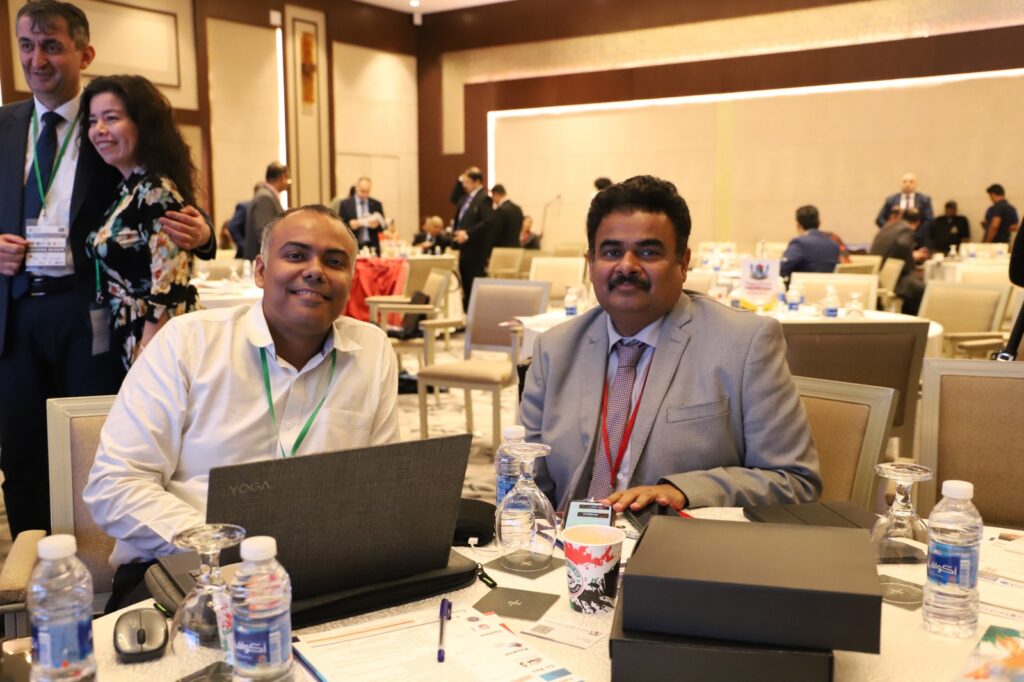
The Vice-Chancellor of Skyline University Nigeria, Prof. Ajith Kumar V.V., recently spoke at the ongoing 2023 EUMMAS Conference on Global Social and Technological Development and Sustainability in Dubai. The conference, which brings together scholars, policymakers, and industry experts from around 30 universities and business schools from more than 20 countries, is aimed at exploring new ideas and solutions for sustainable development and addressing the challenges facing the global community. Prof. Ajith delivered a presentation in which he highlighted the important role that higher education institutions can play in promoting sustainable development. He emphasized the need for universities to focus on research, innovation, and collaboration in order to develop new technologies and solutions that address global challenges such as climate change, poverty, and inequality. The Vice-Chancellor also discussed the importance of incorporating sustainability into the curriculum and educational Programmes of universities. He stated that universities must prepare students to become responsible global citizens who are capable of contributing to sustainable development in their respective fields. Prof. Ajith also stressed the need for universities to work closely with industry partners and policymakers to ensure that the research and innovations developed in universities are effectively translated into real-world applications. He emphasized that collaboration between universities, industry, and policymakers is crucial for promoting sustainable development and addressing the challenges facing the global community. The Vice-Chancellor’s address at the 2023 EUMMAS Conference highlights the important role that universities can play in promoting sustainable development. His remarks emphasize the need for collaboration between academia, industry, and policymakers to ensure that research and innovations are translated into real-world applications that address the challenges facing the global community.  

Collaboration Between Academia, Industry, and Policymakers Will Ensure Research and Innovations are Translated into Real-World Applications – Prof. Ajith Read More »

How Students can Leverage General Elections to boost their Portfolios

The upcoming Nigerian general elections present a rare opportunity for students to exercise their franchise as citizens. It also enables students to experiment and observe some of the knowledge that is being imparted to them by academics at the University. The diversity of disciplines offered at universities equips students with innovative ideas to actively participate in the development activities in society at all levels. Hence, elections are part and parcel of development processes. It is the pillar upon which democratic societies thrive and survive. For example, Skyline University Nigeria offers courses in the Social Arts and Management Sciences (SAMSS) like International Relations, Mass Communication, and Economics, among many others. From these, students gather a lot of information on how to be active social change agents in their various communities.  Because general elections occur after every four years, it always comes with a unique vibe. Students can leverage the happenings and write reports and news pieces that, can be published by reputable media organizations. It is also an avenue for students to select the best research topics, compare with earlier research works and contribute to the general development of Nigeria with their findings and the world at large.  Skyline University Nigeria provides students with soft skills like writing, research, and community service. Students from other disciplines such as the School of Sciences and Information Technology (SSIT), the School of Basic Medical Sciences, and the School of Legal Studies are not left out. They can use their writing and research skills to document election happenings on their social media platforms, to make the election processes accountable and credible. Through their participation, students can support development by highlighting some of the salient issues that could escape the radar of the conventional media, international observers, etc. Like internship opportunities, the students can include such participation and writings in their portfolios. Their effort will certainly attract bigger opportunities for them in the future. It will clear the path for further engagements with public and private organizations. 

How Students can Leverage General Elections to boost their Portfolios Read More »

Leadership Tips students can cull from General Election

For students in Varsities, the Nigerian general elections are opportunities to cull exemplary tips on leadership. Lessons learned can then be replicated in their affairs as students to form effective unisons within their institutions. Almost every aspect of higher education requires leadership. And effective leadership can only be achieved by, adopting effective strategies that have proven to be successful elsewhere. The processes of elections legitimize leaders and present them as capable and legally endorsed in the eyes of their followers in societies.  The careful integration of leadership structure for students in Higher Education Institutions has over time, generated unquantifiable successes. It is used to organize and coordinate students’ affairs effectively. This is visible in the creation of an operative communication chain that, is utilized by students to channel complaints and suggestions to university management. Again, various events are organized by the Student Union Government representatives on a variety of topics like entrepreneurship, career path, and IT skills that are incredibly beneficial for the students. The concept of leadership is embedded and widely embraced in every social structure to allow for even development and avoid chaos. Good leadership has at all times aided in the realization of aspirations and goals of people in diverse societies and organizational set-ups. So, Universities and other higher education institutions award degrees in both learning and character that signifies abilities in knowledge and leadership. Undeniably, leadership is an essential part of one’s character. In the universities, the formation of the Students Union Government (SUG) and other similar obtainable groups like the Students Representative Council (SRC) at Skyline University, is based on the available designated positions in Nigeria and other parts of the world. As such, many tips regarding the organization of elections, voting processes, the appointment of presiding officers, and campaigns among a host of other activities can be emulated by varsity students. With the integration of innovation, students can emulate electronic balloting to ease the processes of choosing their representatives and avoid malpractices.  

Leadership Tips students can cull from General Election Read More »

SUN Graduate and Brand Ambassador Bags UN’s International Women’s Day Award 2023

Ms. Aisha Zanna, a graduate of Mass Communication, at Skyline University, has not ceased to receive rave awards from the international sphere since her graduation in 2022. She recently bagged the United Nations International Women’s Day Award in the category of Grassroots and Civil Society alongside other women at the just concluded United Nations high-level International Women’s Day Award Gala 2023.  The Gala night which was organized in celebration of the exceptionality of women who are champions in promoting women’s leadership and gender equality in Nigeria was hosted by the United Nations Entity for Gender Equality and the Empowerment of Women and the United Nations Development Programme (UNDP). This year’s Gala night took place on the 18th of February, 2023, at the residence of the United States Consul General in Ikoyi, Lagos. Originally from Borno State, Ms. Zanna has made notable contributions as an ardent supporter of women’s leadership and empowerment made her secure a partnership deal with Skyline University Nigeria as a Brand Ambassador. In 2020, she made a giant stride in uplifting internally displaced persons in her hometown and she participated as a speaker at the International Forum 2020 in Montréal, at Centre Mont-Royal. Aisha Zanna also made an impeccable presence at the 3rd Annual Knowledge for Prevention Symposium K4P Symposium, in Rwanda in November 2021 and wrapped up 2022 with unmatched excellence when she participated as a Panel Speaker at the 25th Anniversary of the Children and Armed Conflict Mandate 2022. The International Women’s Day Awards is organized in partnership with the Diplomatic missions and Delegations of Australia, the Democratic Republic of Congo, the European Union, France, Germany, the UK, and the US. The Gala event will specifically aid in boosting the visibility of outstanding women by, recognizing the notable achievements of Nigerian Women. 

SUN Graduate and Brand Ambassador Bags UN’s International Women’s Day Award 2023 Read More »

Digital transformation of Business

Digital transformation of business refers to the process of integrating digital technologies, such as artificial intelligence, cloud computing, and automation, into the various aspects of a business to improve efficiency, productivity, and customer experience. It involves rethinking business models, processes, and operations to leverage digital technologies to create new value propositions and competitive advantages. The digital transformation of business has become a critical component for organizations across all industries. As technology continues to evolve, businesses must adapt to stay competitive and relevant. Digital transformation involves the integration of digital technologies into various aspects of a business, including operations, marketing, and customer experience. The goal is to create new value propositions and improve efficiency and productivity. One of the key benefits of digital transformation is the ability to collect and analyze large amounts of data in real-time. This data can be used to inform business decisions and create a more personalized experience for customers. Additionally, digital technologies such as automation and artificial intelligence can help streamline operations and reduce costs. To successfully implement digital transformation, businesses must have a clear strategy and the right infrastructure in place. This includes investing in the necessary technologies and ensuring that employees have the skills and training to effectively use them. It is also important to engage customers and stakeholders in the process to ensure that their needs and expectations are being met. The digital transformation of business in Nigeria is gaining momentum, with many organizations adopting new technologies to improve their operations and enhance their competitiveness. In recent years, there has been significant investment in digital infrastructure, such as high-speed internet connectivity and data centers, which has created new opportunities for businesses to leverage technology. One of the key areas of focus for digital transformation in Nigeria is e-commerce. Many businesses are now selling their products and services online, reaching a wider customer base and improving their revenue streams. Additionally, there has been a significant growth in fintech, with many innovative digital payment solutions being developed to address the challenges of financial inclusion in the country. The Nigerian government has also taken steps to promote digital transformation, with the launch of the National Digital Economy Policy and Strategy in 2019. This policy seeks to create an enabling environment for digital innovation, by supporting startups, promoting digital skills development, and improving digital infrastructure. However, there are still challenges that need to be addressed, such as the need for more investment in digital infrastructure, and the skills gap among the workforce. Nevertheless, the digital transformation of business in Nigeria has the potential to drive economic growth, create new jobs, and improve the overall standard of living for Nigerians. In conclusion, the digital transformation of business is essential for organizations that want to remain competitive in today’s digital age. By embracing new technologies and processes, businesses can create new value propositions, improve efficiency, and enhance the customer experience. References: Raskino, M., & Waller, G. (2015). Digital to the core: Remastering leadership for your industry, your enterprise, and yourself. Rogers, D. L. (2016). The digital transformation playbook: Rethink your business for the digital age. Columbia University Press. Siebel, T. M. (2019). Digital transformation: survive and thrive in an era of mass extinction. Rosetta Books. Westerman, G., Bonnet, D., & McAfee, A. (2014). Leading digital: Turning technology into business transformation. Harvard Business Press. Dr. Shanmugam Sundararajan is an Associate Professor in the Department of Business Management, Skyline University, Nigeria. He has a Ph.D. in Management, MBA in HR & Marketing from Periyar University Salem, Tamilnadu India. 

Digital transformation of Business Read More »

Skills Students can Learn during the Election Break

The general election is forthcoming and similar to previous elections, it may slightly disrupt a lot of activities within Nigeria. Day-to-day activities such as schooling, markets, travel, and other daily engagements may be halted temporarily. This is to enable individuals to smoothly exercise their fundamental given rights to participate adequately in the process. Among all other activities being interrupted, schooling is paramount.  This is why students are advised to judiciously spend their break wisely, by engaging in upscaling activities. Earning online certificates in skill development will support their careers and drive their passion to stay competitive and relevant as the world transforms rapidly. Some of the high-in-demand skills that students can learn include problem-solving, personal development, public speaking, networking, and effective communication. Learning these important skills will not only place students above their equals but, open the doors of massive opportunities for them. It is also through the process of skill development that students can be able to assess their competencies, unravel their weaknesses and discover new paths to success. Other soft skills that students can explore during the election break include arts and design, graphic design, fashion design, and digital marketing among thousands of skills. The overall goal of engaging in these activities is to acquire more abilities that can be useful in today’s diverse world. The more proficient a student is, the more opportunities he or she is going to get.

Skills Students can Learn during the Election Break Read More »

Some Tips About the Students’ Life @ Skyline University Nigeria

One of the defining characteristics of Skyline University Nigeria is its strong sense of community – it corresponds excellently with global best practices on Higher Education teaching, research, and community service. The University is particularly dedicated to providing a comprehensive education to its students that will be of immense benefit to the larger community. The university has a diverse student body, and there are many opportunities for students to get involved and build professional relationships with their peers. This allows for more learning to set a pace for letting them achieve their future goals without much stress, allowing them to graduate as focus-oriented, after undergoing professional, practical, and academic engagements. Apart from its international approach to teaching, Skyline University Nigeria has a state-of-the-art library and advanced technology system, which gives students access to the resources they need to excel. The students are actively supported through several administrative approaches to be solid enough to face future challenges. Academic and other social activities are always in line with students’ career paths. Whether it’s through clubs and organizations, student-led events, or simply hanging out in the student lounge, there is always a chance to connect with others and make new friends. Some of the unique clubs at Skyline include; Sun-tech Club, Debate club, Dance, Drama, and Toastmasters clubs. In addition to academic activities and providing students opportunities to engage in other social learning experiences, Skyline University Nigeria provides students with a wide array of extracurricular activities and events. There are sports teams, cultural organizations, and service groups, as well as events such as industry visits, guest lectures, and community service projects.

Some Tips About the Students’ Life @ Skyline University Nigeria Read More »