

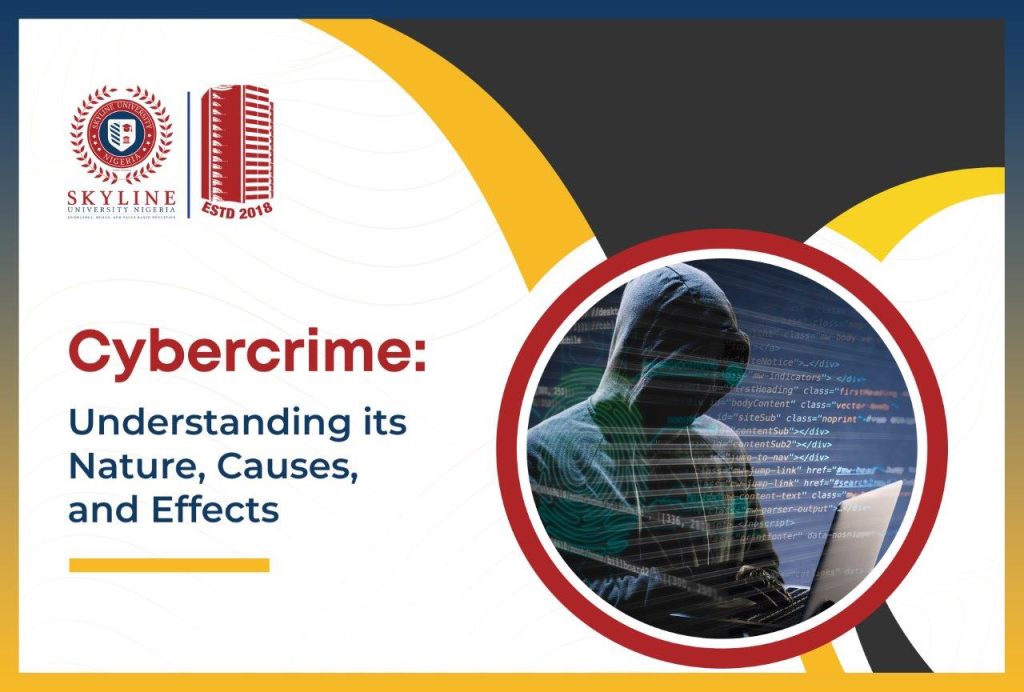
Cybercrime: Understanding its Nature, Causes, and Effects
Introduction Cybercrime has emerged as a global threat, affecting individuals, organizations, and nations. This article delves into the nature, causes, and effects of cybercrime. It explores the various forms of cybercrime, the motivations behind them, and the wide-ranging consequences they have on our interconnected world. Understanding these aspects is essential for developing effective strategies to combat cybercrime. In the digital age, where our lives are increasingly intertwined with technology, the menace of cybercrime looms large. Cybercrime encompasses a wide range of illicit activities carried out in the digital realm, exploiting vulnerabilities in computer systems, networks, and the internet. These activities vary in scope, complexity, and impact, making them a significant challenge for law enforcement, governments, and individuals alike. This article seeks to shed light on the nature, causes, and effects of cybercrime. By examining the motivations behind cybercriminal activities, the methods employed, and the repercussions of these actions, we aim to provide a comprehensive understanding of this ever-evolving threat. The Nature of Cybercrime Cybercrime manifests in numerous forms, including but not limited to hacking, identity theft, malware distribution, phishing, and denial-of-service attacks. Hackers often exploit vulnerabilities in software and hardware, while identity thieves steal personal and financial information. Malware is used to compromise systems while phishing preys on human psychology to gain access to sensitive data. Denial-of-service attacks disrupt online services and websites. One striking feature of cybercrime is its anonymity. Criminals often operate from remote locations, cloaked in digital secrecy, making it challenging to trace and apprehend them. Additionally, cybercrime knows no borders, as perpetrators can target victims across the globe, further complicating legal efforts. Causes of Cybercrime Understanding the motivations behind cybercrime is critical for developing effective prevention and mitigation strategies. There are several driving forces behind cybercriminal activities: Financial Gain: Many cybercriminals are motivated by the prospect of financial rewards. They may seek to steal sensitive financial information, conduct ransomware attacks, or engage in fraud schemes to make a profit. Hacktivism: Some cybercriminals are driven by ideological or political motivations. They engage in hacktivism, targeting government websites or organizations they perceive as adversaries, to advance their cause. Espionage: Nation-states and intelligence agencies conduct cyber espionage to gather sensitive information, such as military, economic, or political intelligence, from other countries. Revenge: Personal grievances or vendettas can drive individuals to engage in cybercrimes against specific targets, such as former employers or personal acquaintances. Thrill-seeking: Some hackers are motivated by the challenge and thrill of breaking into secure systems. They view cybercrime as a form of intellectual challenge. Effects of Cybercrime The effects of cybercrime are far-reaching and can impact individuals, organizations, and society as a whole. These effects include: Financial Loss: Individuals and businesses can suffer significant financial losses due to cyberattacks, including theft of funds, legal costs, and the expenses associated with recovering from an attack. Data Breaches: Cybercrime often results in data breaches, leading to the exposure of sensitive personal and financial information. This can result in identity theft and fraud. Reputation Damage: Organizations that fall victim to cybercrimes may experience reputational damage, eroding trust and customer confidence. National Security Risks: Nation-state cyber espionage and attacks can threaten national security, potentially compromising classified information and critical infrastructure. Psychological Impact: Cybercrime victims often experience emotional distress, anxiety, and fear due to the violation of their privacy and security. Conclusion Cybercrime is a pervasive and evolving threat that requires a multifaceted response. By understanding its nature, causes, and effects, we are better equipped to combat this growing menace. Effective strategies for preventing and addressing cybercrime must consider the motivations driving cybercriminals, the diverse forms it takes, and its far-reaching consequences. As technology continues to advance, the battle against cybercrime remains an ongoing challenge, one that demands constant vigilance and innovation in cybersecurity and law enforcement. Reference Anderson, R., & Clayton, R. (2014). Cybercrime: The Transformation of Crime in the Information Age. Routledge. Europol. (2019). Internet Organized Crime Threat Assessment (IOCTA) 2019. Europol. United States Department of Justice. (2018). Cybercrime. https://www.justice.gov/criminal-ccips/cybercrime Wang, Q., Chen, W., & Wang, X. (2017). Cybercrime and cyber security: A review and future directions. International Journal of Information Management, 37(1), 1-14. Zhang, J., & Chen, W. (2015). Cybercrime and cyber security: A review of the literature. Journal of Computer Information Systems, 56(1), 1-14. Dr. M. Ashok Kumar is a Lecturer I in the Department of Computer Science, Skyline University Nigeria. He has a Ph.D. in Computer Science from Periyar University, India. In addition, he also has MCA from Anna University, India and M.Phil from Thiruvalluvar University, India.
Cybercrime: Understanding its Nature, Causes, and Effects Read More »
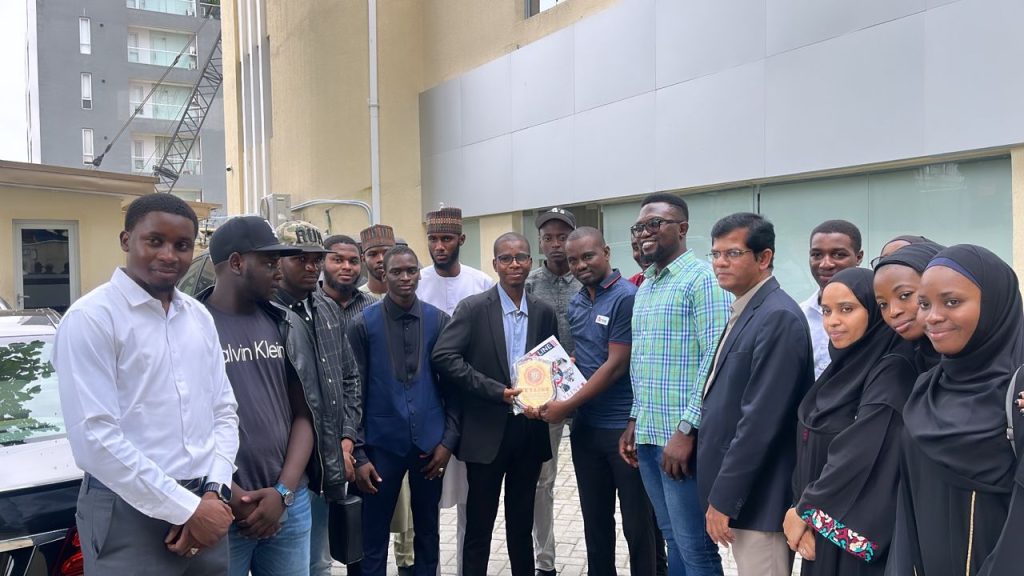
SUN Students resume for 2023/2024 Academic Session
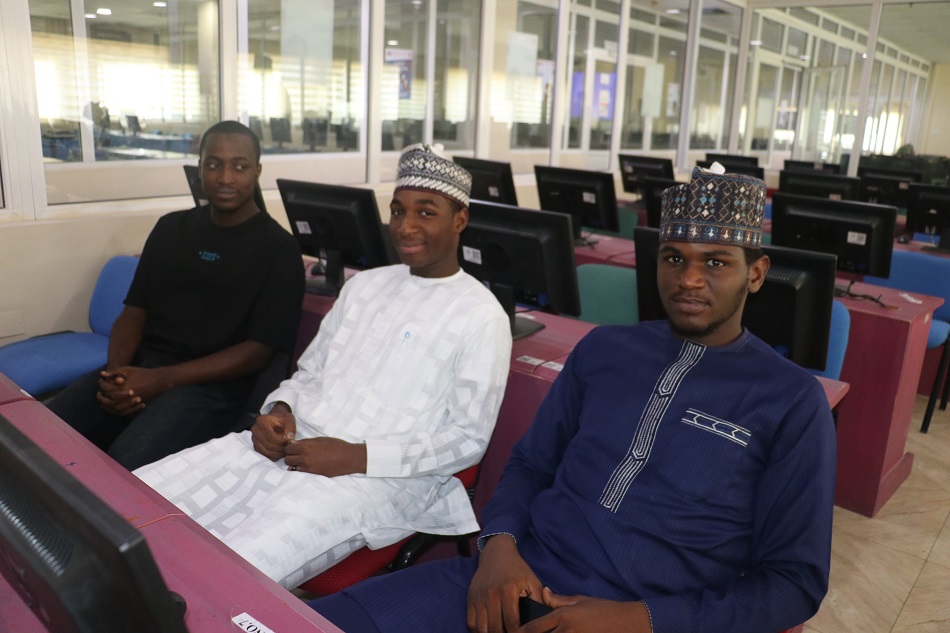
Welcome back, our precious jewels! Skyline University Nigeria is delighted to welcome students back for another fresh academic endeavor. After an exciting vacation period for the students that enabled them to relax and unwind, they are now back on campus. This fresh session promises to give students an adventurous journey and a memorable experience. Our faculty and academic support staff are well prepared to receive you as you continue to pursue your respective careers. During the holiday period, the faculty have been immersed in research to review their curriculum and teaching methods so as to bring you the best learning experiences. The faculty has carefully structured teaching methods alongside global best practices, which will perfectly match your careers with innovative trends around the world. Preparation for your academic success starts now. You have been able to reflect on the strengths and weaknesses you exhibited in the last academic session. You now have a better knowledge of how best to achieve your academic plans. Hence, SUN is dedicated to providing you with innovative educational services that will support endeavours. You can pursue limitless opportunities with excellence in knowledge, skills, and value-based education which are our top priorities. It is now time to realign your goals and face your studies. Remember to prioritize the following key elements as you make your plans; Journaling Time Management Mental Health and Physical Exercises Study Skills We hope you will have a fruitful learning experience! You can join the conversation on Facebook @SkylineUniversityNG and on Twitter @SkylineUNigeria
SUN Students resume for 2023/2024 Academic Session Read More »

Skyline University Nigeria commemorates African Traditional Medicine Day
Skyline University Nigeria (SUN) has commemorated African Traditional Medicine Day with a two-day international conference on the ‘Importance and Awareness of Traditional and Alternate Medicine’. The university organized the conference in collaboration with Shri Shankaracharya Professional University (SSPU) to highlight the importance of African Traditional Medicine on the health of Africans in Bhilai, India, from the 25th to the 26th of August, 2023. In his virtual inaugural address, the vice-chancellor of SUN, Prof. Ajith Kumar V. V., stated that he was delighted to be part of the conference. He said traditional medicine is very important in Africa and explained that the continent is richly endowed with natural resources that have immense health benefits. He then urged the researchers and academics who attended the event to invest more in African traditional medicine research so as to offer solutions to healthcare challenges in Africa and beyond. Delivering his speech, Prof. Sanjoy Kumar Pal, the guest of honour and a SUN faculty member, spoke on the future of phytomedicine and the challenges that it had to overcome. He said there has been a rapid increase in the use of traditional medicine in Africa, which has come with challenges. Dr. Isah Usman, the Dean of the School of Basic Medical Sciences (SBMS) at SUN, who was a keynote speaker, delivered his speech on the topic Traditional Medicine in Nigeria: The Journey So Far. He stated that traditional medicine has undergone strategic transitions over time, which has made it an important topic of discourse. Similarly, Mr. Isma’il Rabiu, a lecturer in the Department of Biochemistry at SUN who was also a keynote speaker, emphasized the need for research and regulation on the use of traditional medicine in Africa to ensure its safe usage. Speaking on the occasion Shri. I. P. Mishra, the Chief Patron and Chancellor of SSPU, was vocal about the increased use of traditional medicine globally and emphasized increasing research efforts to bring respectability to the field of complementary and alternative medicine (CAM). The convener of the conference, Prof. (Dr.) Swarnali Das Paul expressed her gratitude to the management of both universities for supporting the collaborative conference and hoped that such an educational event would occur in the future to continue this type of conference in the future as well. The vice-chancellor of SUN, faculty, and other participants were awarded honours for gracing the important congregation. Over 300 students and staff from various universities and colleges in India attended this two-day conference. You can join the conversation on Facebook @SkylineUniversityNG and on Twitter @SkylineUNigeria
Skyline University Nigeria commemorates African Traditional Medicine Day Read More »
Skyline University Nigeria participates in QS Africa Forum 2023
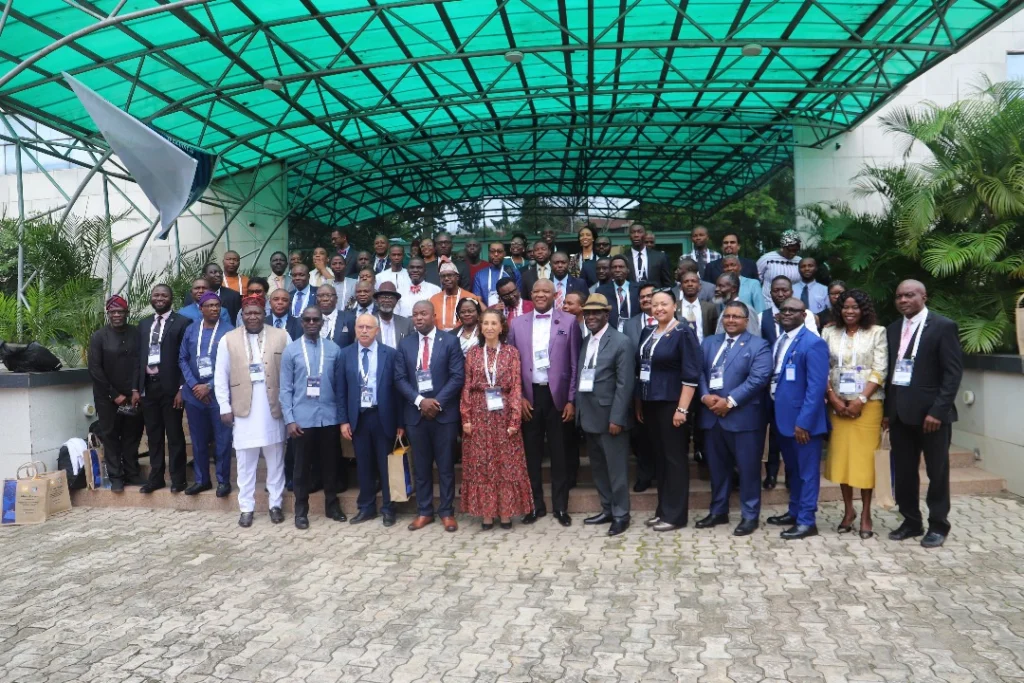
Skyline University Nigeria has participated in the Quacquarelli Symonds (QS) Africa Forum 2023 with the theme ‘Education Africa 2030 and Beyond – Sustainability and Social Impact in an African Context’. The vice-chancellor of SUN, Prof. Ajith Kumar V. V., participated in a panel discussion to engage and network with higher education experts from around the world on the topic ‘Building Partnerships for Educational Sustainability in Africa”. The two-day event that happened from the 4th to the 5th of September 2023, was hosted by Covenant University in Ota, Ogun State. It was a convention of academics, industry experts, and stakeholders from across the continent to discuss critical issues in higher education, research, and innovation. The QS is a British establishment known for its university and college rankings. Delivering his remarks during the panel discussion moderated by Ms. Omolola Shonubi, the Vice-Chancellor of SUN stated that the congregation is highly important for universities to network so as to find sustainable solutions to their problems. He explained that SUN has done an impressive job of integrating technology into learning, research, and community service. Other participants who spoke at the forum include former, Dr. Ashwin Fernandes, Executive Director – Africa, Middle East & South Asia, QS United Kingdom, Consul General of Ghana to Nigeria Ms. Samata Gifty Bukari, the Former Executive Secretary of the National Universities Commission (NUC) Prof. Peter Akinsola Okebukola, the Chancellor of Covenant University, Dr. David O. Oyedepo among other stakeholders. SUN staff who attended the event include the Director of Marketing and Communications (DOMC), Mr. Abubakar Isma’il, the Dean School of Basic Medical Sciences (SBMS), Dr. Isah Usman Lawal, Head of the Department of Political Science, Mr. Farid Ilyasu Illo, the Head of Corporate Affairs Department, Mr. Nitish Varkhede, Dr. Ajayi Olumide Abraham, Mr. Trimisiyu Omotayo Lawal, Mr. Miracle Livinus Uwa and Mr. Aliyu Usman from the marketing department. The congregation engaged professionals and stakeholders in the education industry to collaboratively shape the future of higher education and development in Africa. You can join the conversation on Facebook @SkylineUniversityNG and on Twitter @SkylineUNigeria
Skyline University Nigeria participates in QS Africa Forum 2023 Read More »
Knowledge Sharing among Robots; A Road Map to improve AI capabilities
Introduction A robot is a type of automated machine that can carry out particular activities quickly and accurately with little to no human involvement. In the past 50 years, there has been a significant advancement in the subject of robotics, which deals with the design, engineering, and operation of robots. If a company had a central database of information that all staff members could access, that would be an example of knowledge sharing. Best practices, lessons learned from prior projects, or even just helpful hints and advice could be included in this. Although Programmeming conveys explicit knowledge from a human to a robot, a critical aspect of knowledge is lost in the process, making the knowledge no longer regarded as “knowledge.” There is nothing but human-Programmemed information. Only one of them is Knowledge Sharing among Robots. How do robots communicate with one another through a knowledge base like Robot Google? Two knowledge modifications, in our opinion, can be useful. The first transformation occurs in robots when information is changed from the robot’s internal representations, which are likely only known to itself, to a form that is understandable to other parties, i.e., Robot Google and other robots. The knowledge that is represented in the format created by the first transformation is turned into a representation that can be effectively indexed in Robot Google as part of the second transformation. When Robot Google can successfully respond to questions from other robots, knowledge is shared. Among robots, knowledge sharing entails the dissemination of knowledge, data, or experiences from; Communication Protocols Robots can share information using established communication protocols, such as MQTT (Message Queuing Telemetry Transport) or ROS (Robot Operating System). These protocols allow robots to publish and subscribe to topics, exchanging data and knowledge. Centralized Knowledge Repository Establishing a centralized repository where robots can upload, access, and update knowledge .This can include databases, cloud storage, or decentralized ledgers where robots contribute and extract information. Machine Learning and AI Algorithms Utilizing machine learning models and AI algorithms to process and analyze data, extract patterns, and learn from the experiences of other robots. The insights gained can be shared among robots to enhance their learning and decision-making processes. Collaborative Learning Encouraging robots to collaborate on tasks and learn from each other’s actions and strategies. This collaborative approach allows robots to share insights and knowledge in real-time, leading to more efficient problem-solving. Natural Language Processing (NLP) Incorporating NLP techniques to enable robots to extract knowledge from text, enabling them to read and understand manuals, research papers, or other relevant documents to enhance their capabilities. Experience Replay Allowing robots to store and replay their experiences, enabling other robots to learn from these experiences without having to go through the same process again. This can be akin to how humans share and learn from stories and narratives. Human-Robot Interaction Facilitating knowledge sharing through interaction with humans. Robots can learn from humans and collaborate with them, extracting knowledge from verbal communication, demonstrations, or shared visual information. Effective knowledge sharing among robots requires a balance between data security, privacy, standardization, and collaborative learning, ensuring that robots can collectively improve their performance while respecting ethical and privacy considerations. Potential Impact of Knowledge sharing among robots has far-reaching implications across various domains: Enhanced Learning and Adaptability Robots can learn from a collective pool of experiences, improving their ability to adapt to new and challenging environments. Efficient Problem Solving The collective intelligence of robots allows for more efficient and effective problem-solving, leading to quicker and better outcomes. Optimized Resource Utilization Shared knowledge enables robots to optimize resource usage and avoid redundant efforts, ultimately increasing efficiency and cost-effectiveness. Broader Application Scope Knowledge sharing expands the range of tasks and applications robots can undertake, making them more versatile and valuable in diverse scenarios. Conclusion Knowledge sharing among robots is a pivotal step towards creating more intelligent and capable robotic systems. As advancements continue, we can expect to see robots collaborating, learning, and evolving in ways that were previously unimaginable, propelling the field of robotics into a new era of innovation and functionality. References https://users.cs.utah.edu/~tch/CS5350/resources/sample_paper/RobotGoogle.pdf https://link.springer.com/article/10.1007/s12369-023-01034-9 https://www.sciencedirect.com/science/article/abs/pii/S0893608010001188 https://www.atlantis-press.com/proceedings/iccia-19/125913157 https://sciendo.com/article/10.1515/aucts-2017-0018 Dr. A. Senthil Kumar is an Associate Professor in the Department of Computer Science and the current Dean of the School of Science and Information Technology (SSIT) in Skyline University Nigeria. He has completed his Ph.D. in Computer Applications in June 2017 from Manonmaniam Sundarnar University, Tirunelveli, Tamil Nadu, India.
Knowledge Sharing among Robots; A Road Map to improve AI capabilities Read More »